
As we age, life has a way of coming full circle. One day, we’re carefree children relying on our parents for everything, and the next, we’re the ones stepping into the role of caregiver as our parents enter their twilight years.
It’s a bittersweet transition, one that I experienced firsthand as I cared for my dad in his final years. Now, as more of my friends find themselves in similar situations, I’m often asked for advice on how to navigate this challenging phase of life.
Today, I want to share my journey and the lessons I learned along the way, in the hope that it might help others facing the same responsibilities.
The Home Setup: Preparing for the Transition
When my dad’s health began to decline, one of the first things we had to address was making his living space safe and comfortable. This meant transforming his home into a place that could accommodate his changing needs.

Essential Medical Equipment and Supplies:
Hospital Beds and Air Mattresses: These are crucial for preventing bedsores, ensuring comfort, and making it easier to assist with transfers. I learned this the hard way with my dad. I never knew how important an air mattress was until a nurse explained the risk of bedsores.
Commodes and Walkers: These aids can help maintain independence and dignity while reducing the risk of falls.
Accessibility Modifications: Consider installing grab bars in the bathroom, ramps for wheelchairs, and widening doorways for easier movement.
Everyday Essentials: Something as simple as straws became a necessity when drinking from a cup became difficult. We also stocked up on diapers, antibacterial cleaning agents, and other supplies to manage his daily care.
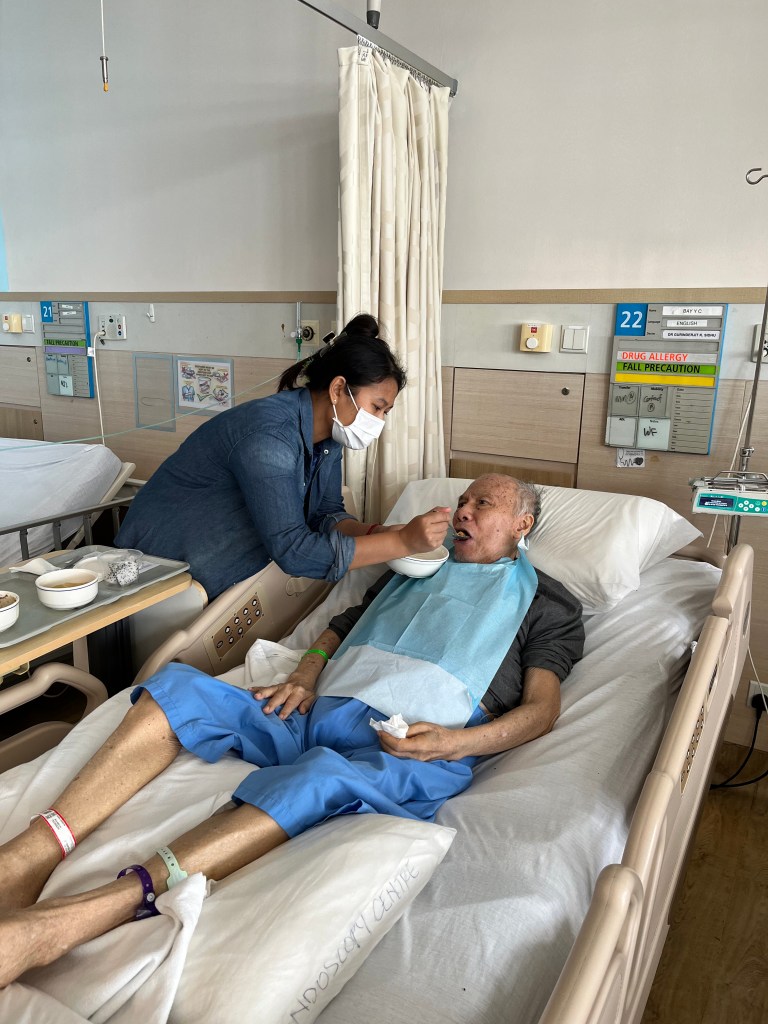
The Need for Help: Recognizing When to Step In
My mom, who lived with my dad, was ill equipped to manage the situation, it quickly became clear that she couldn’t manage alone. His health was declining rapidly, and the physical and emotional toll was too much for her to bear.
Finding the Right Caregiver: We turned to a maid agency to find someone experienced in caring for bedridden elderly patients. It was crucial to find someone who was not only skilled but also compassionate and patient.
Planning for Off Days: We also arranged for a part-time helper to cover the caregiver’s weekly day off. This ensured that my dad’s care was consistent and that my mom wasn’t overwhelmed.
Managing Medical Needs: Staying on Top of Health
As my dad’s health worsened, managing his medical needs became a full-time job.
Medication Management: Keeping track of his medications and ensuring they were replenished on time was a constant task. We also had to adjust dosages and medications as his condition changed.
Doctor Home Visits: Arranging for doctor home visits was a lifesaver, especially as traveling to the clinic became increasingly difficult.
Dietary Changes: One of the hardest parts was watching my dad lose his appetite. We transitioned him to a liquid diet, which was easier for him to consume and digest.
Navigating the End-of-Life Journey
The end-of-life journey is a deeply personal and often difficult time.
Difficult Medical Decisions
As your parents’ health declines, you may face difficult medical decisions regarding end-of-life care. These decisions can be emotionally charged and require careful consideration.
Now, for the part nobody wants to talk about but everyone needs to hear. There came a point when we had to discuss weaning off medications. It’s a conversation that breaks your heart, but one that needs to happen. Having a supportive medical team who could guide us through this decision was invaluable.
Finding Peace and Support
The Importance of Palliative Care: Palliative care focuses on providing comfort and improving the quality of life for individuals with serious illnesses. It can help manage pain, alleviate symptoms, and provide emotional and spiritual support.
Funeral Arrangements: Planning funeral arrangements in advance can be a tremendous relief for both you and your family. I was fortunate to find a funeral director who was incredibly supportive and helped me navigate the process with grace and compassion. They handled all the arrangements, from the cremation to the sea burial, allowing me to focus on what mattered – saying goodbye to Dad.

Reflections
This journey taught me a lot about patience, love, and the importance of being prepared. It’s never easy, but understanding what might come can make the process less daunting. For anyone stepping into this role, remember:
- Preparation: Start adapting your home early and gather all necessary equipment.
- Support: Don’t hesitate to seek help, whether it’s through family, professional caregivers, or medical professionals.
- Self-Care: Caring for someone else is exhausting; ensure you’re taking time for your own health and well-being.
- Emotional Readiness: It’s okay to grieve and feel overwhelmed. This is a profound life event.
Here is more about my personal experience of my dad’s final days. I hope sharing my experience helps in navigating these complex times. Each journey is unique, but knowing what might lie ahead can arm you with the tools to handle it with grace and love.
 Live Life
Leave a comment