My Unexpected Journey to Design Your Life
Have you ever found yourself at a crossroads, wondering if the path you’re on truly reflects who you are? That’s exactly where I was 1.5 years ago, though I didn’t realize it at the time. What started as a simple curiosity about healthy aging led me on an unexpected journey of self-discovery that culminated in two transformative days at a “Design Your Life” workshop, a program originally crafted at Stanford but now tailored for those of us in our 50s and beyond. The goal? To help us design our next chapter with intention, authenticity, and joy.
Revolutionary Approach to Life Design
Think about how designers approach creating a product. They don’t just wing it—they research, prototype, test, and iterate. The Design Your Life course takes this same systematic approach and applies it to life decisions. Pretty clever, right?
What makes this approach so powerful is that it acknowledges something many traditional life coaches miss: you can’t just think your way to a better life. You have to experiment, try things out, and be willing to pivot when something isn’t working.
Why the 50+ Version Resonated So Deeply
This version is specifically designed for those of us over 50 hence we’re not starting from scratch here—we have decades of experience, relationships, and yes, sometimes baggage. The course didn’t ignore this reality; it embraced it.
At our age, we’re not asking “What do I want to be when I grow up?” We’re asking “What do I want the next chapter to look like?” and “How can I honor who I’ve become while still growing?” These are fundamentally different questions that require a different approach.
For me, the workshop reinforced much of what I’ve already been doing—but for some of my fellow participants, it was a game-changer.
If you’re at a crossroads or just curious about shaping your next chapter with purpose, here are my key takeaways—and why this approach might help you too.
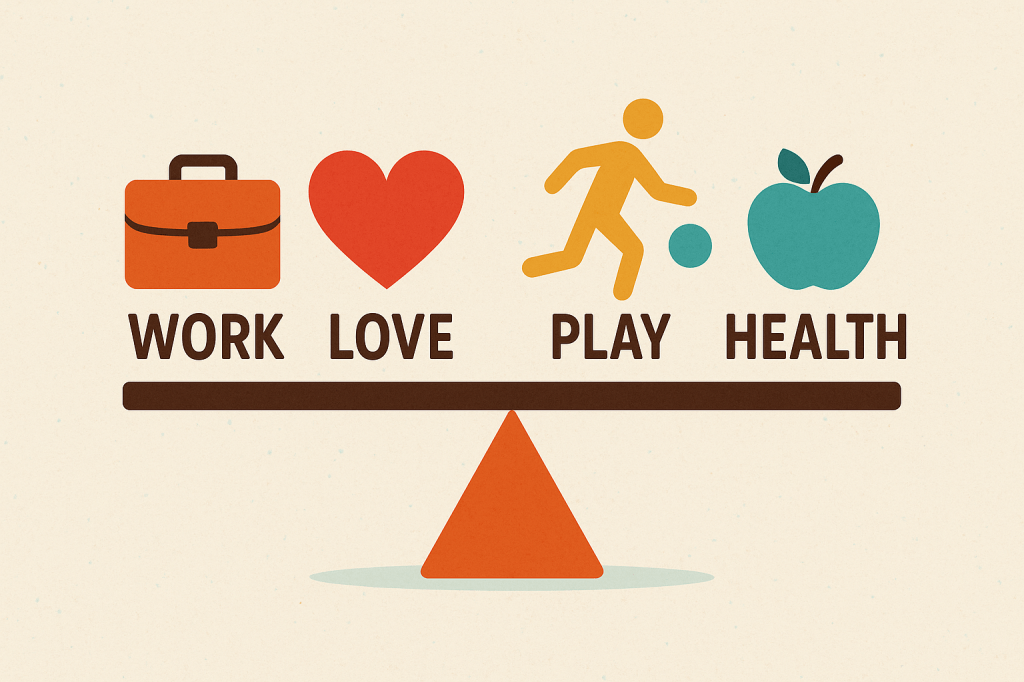
1. Life is Made of Four Key Areas: Work, Love, Play, Health
One of the core concepts of DYL is that a well-designed life balances four key dimensions:
- Work (paid or unpaid, but meaningful)
- Love (relationships, community)
- Play (joy, creativity, leisure)
- Health (physical, mental, emotional)
My Reflection:
I realized that launching Ageisano 1.5 years ago was my way of aligning these areas—work (blogging), love (connecting with readers and friends), play (exploring new topics), and health (learning about longevity).
But not everyone has this balance. Some participants were so focused on work that they neglected play. The lesson? Neglecting one area throws the rest off balance.
These four areas need attention. If one is off-kilter, it affects the whole system. Check in regularly.
2. Prototype Your Ideas (Don’t Just Plan Them)
Design thinking encourages small experiments instead of waiting for the “perfect” plan.
- Want a new career? Volunteer or take a short course first.
- Considering a move? Rent in the area for a month.
- Feeling isolated? Join one new social group before committing long-term.
My Reflection:
My early travels were a form of prototyping—testing what adventures suited me before settling into routines. Similarly, Ageisano started as a curiosity before becoming a passion.
Some participants feared making big changes, but the idea of “testing before investing” eased their anxiety.
You don’t need to have everything figured out. Just start experimenting. Try new things, see what sticks, and refine as you go.
3. Reframe Problems as Opportunities
A major mindset shift in DYL is reframing challenges.
- “I’m stuck in my job” → “What skills here can I transfer elsewhere?”
- “My kids left home” → “What passions did I put aside that I can revisit?”
- “I have health issues” → “What lifestyle adjustments can improve my well-being?”
My Reflection:
My gout diagnosis years ago forced me to rethink nutrition—which led me to study healthspan and eventually blog about it. What felt like a setback became a launchpad.
Many participants had “problems” that, when reframed, revealed hidden opportunities.
We often talk about time management, but energy management is more important — especially as we age. What gives you energy? What drains it? Design your life around the former.
4. Your Life is a Work in Progress (And That’s Okay!)
Society makes us feel like we should have everything “figured out” by midlife. But DYL reminds us: Life is iterative.
- It’s okay to pivot.
- It’s okay to try something and change your mind.
- It’s okay if your “next chapter” looks nothing like your past.
My Reflection:
I’ve lived by the mantra: “Never wait for tomorrow what you can do today.” That’s why I traveled adventurously when younger and started blogging at 50+.
For participants who felt “too old” to change—the workshop showed them that reinvention has no age limit.
Why This Matters for Active Aging
Aging actively isn’t just about physical health—it’s about designing a life that excites you. Whether you’re:
- Feeling stuck in a rut
- Recovering from a job loss
- Adjusting to an empty nest
- Or just curious about what’s next
…the principles of Design Your Life can help.
For me, the workshop validated my path, but for others, it was the nudge they needed to start designing theirs.
Ask questions like, “What would make this next chapter meaningful to me?” or “What am I curious about trying?” rather than forcing yourself into boxes.
You don’t have to figure this out alone. Surround yourself with people who uplift you, challenge you, and cheer you on.
Keep Redesigning
Life doesn’t stop evolving when you hit 50. In fact, that’s when things can get really interesting — if you let them.
Whether you’re feeling stuck, curious, or simply ready for something new, I encourage you to ask yourself:
What kind of life do I want to design next?
Let’s keep exploring together.
— Ageisano 🌟 aka Jane
Useful Links and Reading materials
Designing-your-life-next-chapter ( for those living in Singapore)
The Achievement-Habit Stop Wishing,Start Doing and Take Command of Your Life Bernard Roth
Affiliate Disclosure: Some of the links in this post may be affiliate links. If you click an affiliate link and make a purchase, I may receive a small commission at no extra cost to you. Affiliate links help support this website.
 Live Life
Leave a comment