
I’m posting a day earlier than my usual mid-week rhythm—because I’ll be heading off to Chengdu, China for 10 days of dumplings, pandas, and mountain air! Before I zip up my suitcase though, I want to share something new that’s reshaped how I move through my everyday routines: rucking.
What Exactly Is Rucking?

What Is Rucking, and Why Should You Care? For those new to the term, rucking is simply walking with a weighted backpack. It’s a low-impact exercise that combines cardio, strength training, and endurance in one go. Originally a military training technique, rucking has caught on with fitness enthusiasts of all ages, and for good reason—it’s brilliant for active aging. Here’s why I’m such a fan:
- Builds Strength Without Stress: Rucking strengthens your legs, core, and back without the joint-pounding intensity of running or heavy weightlifting. For those of us in our 50s and beyond, it’s a fantastic way to maintain muscle mass and bone density, which are critical for staying mobile as we age.
- Boosts Cardiovascular Health: Carrying a bit of extra weight gets your heart rate up, giving you a solid cardio workout without feeling like you’re gasping for air. It’s gentle yet effective, perfect for keeping our hearts strong.
- Improves Posture and Balance: The added weight forces you to engage your core and stand tall, which is a godsend for counteracting the slouch that can creep in with age. I’ve noticed my posture improving, and I feel more stable on my feet.
- Mental Health Perks: There’s something meditative about rucking. The rhythmic walking, combined with the slight challenge of the weight, clears my mind and lifts my mood. Plus, it’s a great excuse to get outside and soak up some vitamin D.
- Adaptable and Accessible: You don’t need a gym or fancy equipment—just a backpack and something heavy to put in it (think water bottles, books, or even canned goods). You can ruck anywhere, anytime, at your own pace.
The magic is in its simplicity: it strengthens your muscles, improves posture, and boosts cardiovascular health—all without needing a gym membership or fancy gadgets.
Why I Started Rucking
A friend introduced me to rucking recently, swearing by its benefits. At first, I laughed. Wasn’t my neighborhood walk good enough? But curiosity won, and I decided to test it out.
Turns out, carrying extra weight while walking does wonders. It doesn’t just burn more calories; it strengthens the back and core muscles that keep us upright and stable as we age. And let’s face it—active aging isn’t just about living longer, it’s about living stronger.
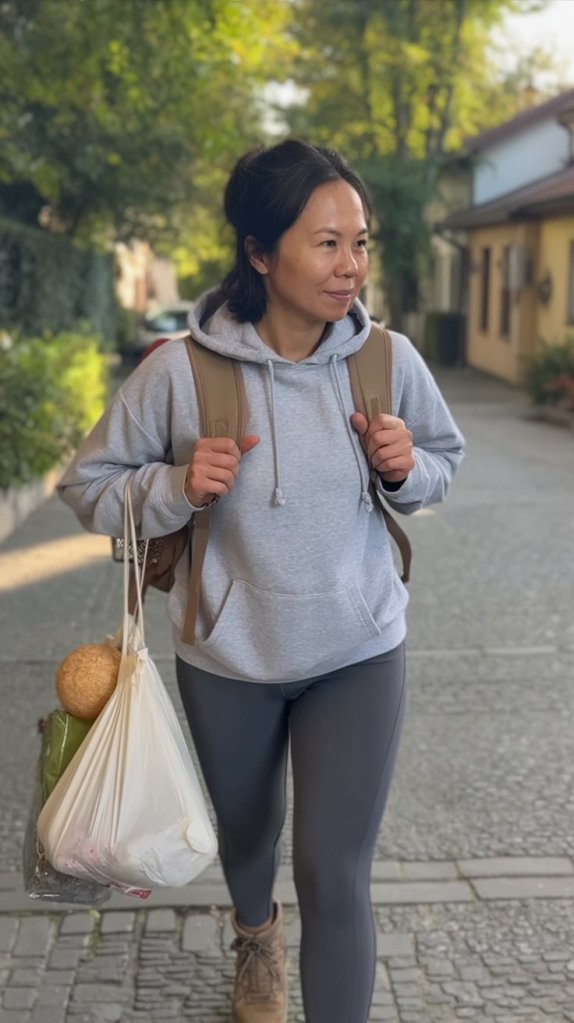
My Big Switch: From Trolley Bags to Backpacks
Here’s the confession: I used to be a die-hard trolley bag shopper. Wheels, convenience, and a little roll-along rhythm—what’s not to love? But since learning about rucking, I’ve swapped the trolley for a sturdy backpack on my supermarket runs.
It felt drastic at first—almost rebellious. Yet, every bag of apples or carton of milk I sling onto my back is now part of my fitness routine. Instead of dragging my groceries, I carry them with pride, turning a mundane errand into a mini-workout. Small change, big impact.
How Rucking Fits Into Active Aging
What I’ve realized is that aging actively isn’t always about grand gestures like marathons or mountain treks. It’s about micro-shifts in how we live daily life. Choosing stairs over escalators. Swapping the trolley bag for a backpack. These little decisions add up, training our bodies to stay strong and adaptable.
And here’s the bonus: I no longer feel guilty about skipping a formal workout on supermarket days—because carrying my groceries counts!

Final Thoughts
Rucking has become my reminder that the path to aging well isn’t about doing more—it’s about doing smarter. By making everyday movements work for us, we build resilience, strength, and confidence.
So the next time you head out—whether it’s for a stroll in the park or a grocery run—consider strapping on a backpack. Your future self (with better balance and a sturdier back) will thank you.
 Live Life
Leave a comment