
I was sitting on my balcony this morning, the kind of still, cool air you only get just after a tropical rain, sipping my strong black coffee. The sun hadn’t quite burned through the clouds yet, painting the sky in a gentle wash of pink and gray. It was one of those rare, quiet moments where you feel completely present—a sense of peace earned through fifty-something years of riding life’s chaotic waves.
I picked up my phone, intending to check the weather for my evening walk to the beach, and that’s when the peace broke. Not with a crash, but with a polite, corporate-sounding ping on WhatsApp.
“Hi, I came recommended and was wondering if you’re still open to a contract role? Attractive full-time and part-time benefits with flexible hours.”
Ah, a job scam. Again.
This one was insidious because the country code was local—a Singapore number—not the obscure Turkish or Nigerian one I’ve seen before. But I hesitated. I remembered the essential lesson from the online cybercrime training I took for a previous APEC digital role three years ago: Stop. Check. Protect.
What gave the game away, in the end? A tiny mismatch between the polished company name they initially used and the “registered company name” they later provided. A microscopic thread pulled in an otherwise perfectly woven lie.
That tiny moment of vigilance—the flicker of memory, the pause before the click—was a mirror for everything I try to preach about Active Aging. It’s not just about getting 10,000 steps or drinking enough water. It’s about being actively, consciously, and humorously present in the world—especially when that world is trying to fleece you of your hard-earned retirement savings.

🎭 The Human Firewall: Discernment is Our Best Defence
The central analogy I’ve been mulling over lately is this: Our awareness, our ability to discern, is the ultimate firewall.
A firewall’s job isn’t to be paranoid; it’s to distinguish the trusted, familiar traffic from the malicious, unknown noise. It’s a tool of discernment, not fear.
The tricky thing about aging, about living well, is that it requires us to be simultaneously open and guarded. We want to be open to new friendships, new travel experiences, new opportunities, which inherently means embracing a degree of vulnerability. But as the world gets more connected, the predatory forces get more sophisticated, more global, and frankly, more ruthless.
It used to be the lonely “Nigerian Prince” email catching the headlines—a scam so clunky it relied on sheer volume and the desperation of a few. Today, the landscape has utterly transformed. We’re not dealing with isolated con artists anymore; we’re talking about sophisticated, global syndicates, often operating out of major scam hubs in places like Cambodia. These are well-funded, full-time operations that use AI, social engineering, and a chilling patience to craft the perfect approach.
And they prey on our most fundamental human needs: the need for love, money, and belonging.

💔 I’m Guilty Too: The Time I Believed in the Romantic Fantasy
If you’re reading this thinking, “Well, I would never fall for that,” let me stop you right there. I have. And I’m only sharing this because authenticity, I believe, is the only way forward.
In my early 40s, right as I was navigating the confusing waters of online dating after my divorce, I encountered the “romantic” type. He was charming, attentive, handsome (according to his photos), and always on a high-stakes, overseas project that prevented a physical meeting. The connection felt electric because he made it so. He was thoughtful, sent sweet, personal messages, and was genuinely interested in my life. The whole thing was a beautiful, well-crafted fantasy—until the conversation pivoted from poetry and future plans to “temporary financial difficulties” that required a small, immediate wire transfer.
Thankfully, my personal alarm bells—the ones forged in a lifetime of self-reliance—rang just loud enough. I lost some time, a lot of emotional energy, and a small, negligible amount of money, but the emotional toll was a punch to the gut. The damage wasn’t just losing money; it was the shame of being tricked and the sting of realizing that the connection was nothing but a cold, transactional performance.
I am only thankful that I didn’t lose too much money, but the time and emotional damage caused more. It was a crucial, hard-won lesson: Vigilance isn’t just about protecting your bank account; it’s about protecting your emotional real estate.
📈 The Escalation: S$1.1 Billion Lost and the New Global Traps
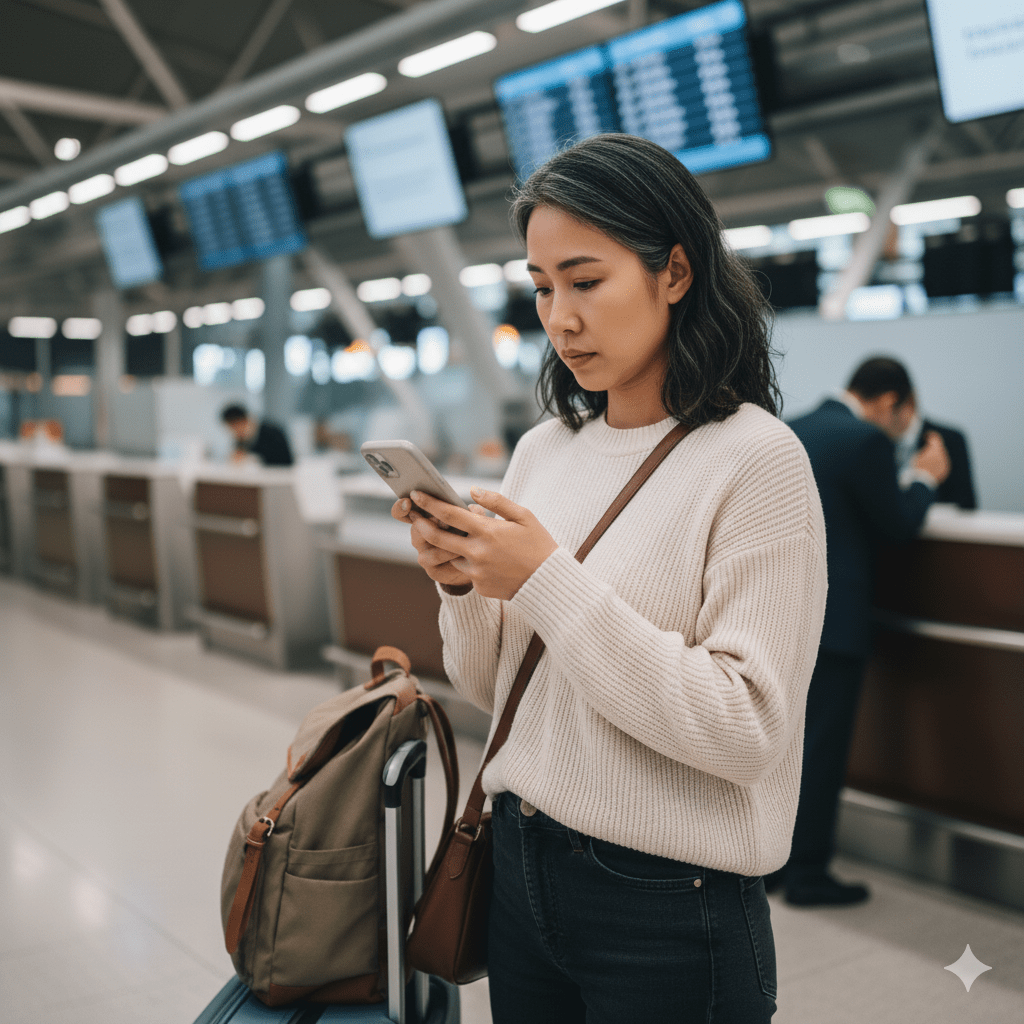
The reality is that these criminals are escalating their efforts globally. Here in Singapore, a major financial hub, the numbers are sobering.
In 2024, the total amount lost to scams and cybercrime in Singapore reached a staggering S$1.1 billion, an increase of over 70% from the previous year. This is the highest loss on record. What’s even more insidious is how they target our demographic. While younger victims are hit hard by e-commerce and smaller job scams, those of us in the “Young Senior” bracket (50 to 64) are often targeted by high-loss Investment Scams and sophisticated Phishing Scams. These are designed for people who have accumulated their retirement savings and are looking for ways to grow their funds.
They’ve even moved into our essential life tasks, like travel.
The E-Visa Trap: The Scam You Don’t See Coming
Travel used to be a scammer-free zone, but the recent introduction of E-Visas and pre-arrival authorisations (like the UK’s ETA or Thailand’s Digital Arrival Card) has created a gold rush for them. This is a fairly new requirement in many parts of the world, and that novelty is the scammer’s best friend.
Like my friend who was applying for an E-Visa for a different trip, I recently clicked on the first link I saw when I searched. It looked official—polished, government-style logos, and it was right at the top of the search results, often marked as a “Sponsored Ad.”
It wasn’t until the immigration officer, in a quiet moment during the application process, flagged to me which link was the official government one that I realized I was one click away from losing money and sensitive data. The scammers are paying top dollar to have their fake, official-looking sites appear as the very first result, bypassing our usual defenses because the process itself is new to us. This results in travelers paying inflated fees for invalid documents, or worse, having their personal data stolen for identity fraud. Our hard-earned savings should be spent on experiencing the world, not on funding criminal enterprises.
💡 Three Principles for Guarding Your Gold (and Your Peace)
My experiences, the horrifying statistics, and the recent E-Visa/Job Scam attempts have crystallised a few gentle but firm principles for aging actively and safely in this new, hyper-connected world.
1. Adopt a Healthy, Active Skepticism
Skepticism doesn’t mean you stop trusting people; it means you stop instantly trusting unsolicited communication. The firewall must be set to “high.”
When you receive a text, call, or email out of the blue, especially one demanding immediate action or promising extraordinary returns, your immediate response should be: “This is likely a scam.” Then, proceed with verification.
The Golden Rule: Never, ever use the contact information (the number, the email, the link) provided in the suspicious message itself. Independently look up the official contact details (the bank, the company, the government agency) and call them directly. For job offers, go to the supposed company’s actual website and look at their career page.
2. Verify Every. Single. URL.
When arranging travel, visas, or making financial transactions online, you must check the URL. Do not rely on the first search result, especially if it is labelled “Ad” or “Sponsored.”
The official government site will always have the country-specific government domain, like .gov.sg in Singapore, .gov.uk in the UK, or .gov in the US/Australia. Be wary of URLs that use common extensions like .com or .org to mimic an official site. If you’re not sure, search for the Immigration Department or Ministry of Foreign Affairs of the country and navigate from their main page. If the site is asking for significantly higher fees than the standard rate, it is a massive red flag.
3. Tool Up: The Government Guardrails
We need to use the tools our governments are building to fight back. For my global readers, look for official, government-backed initiatives.
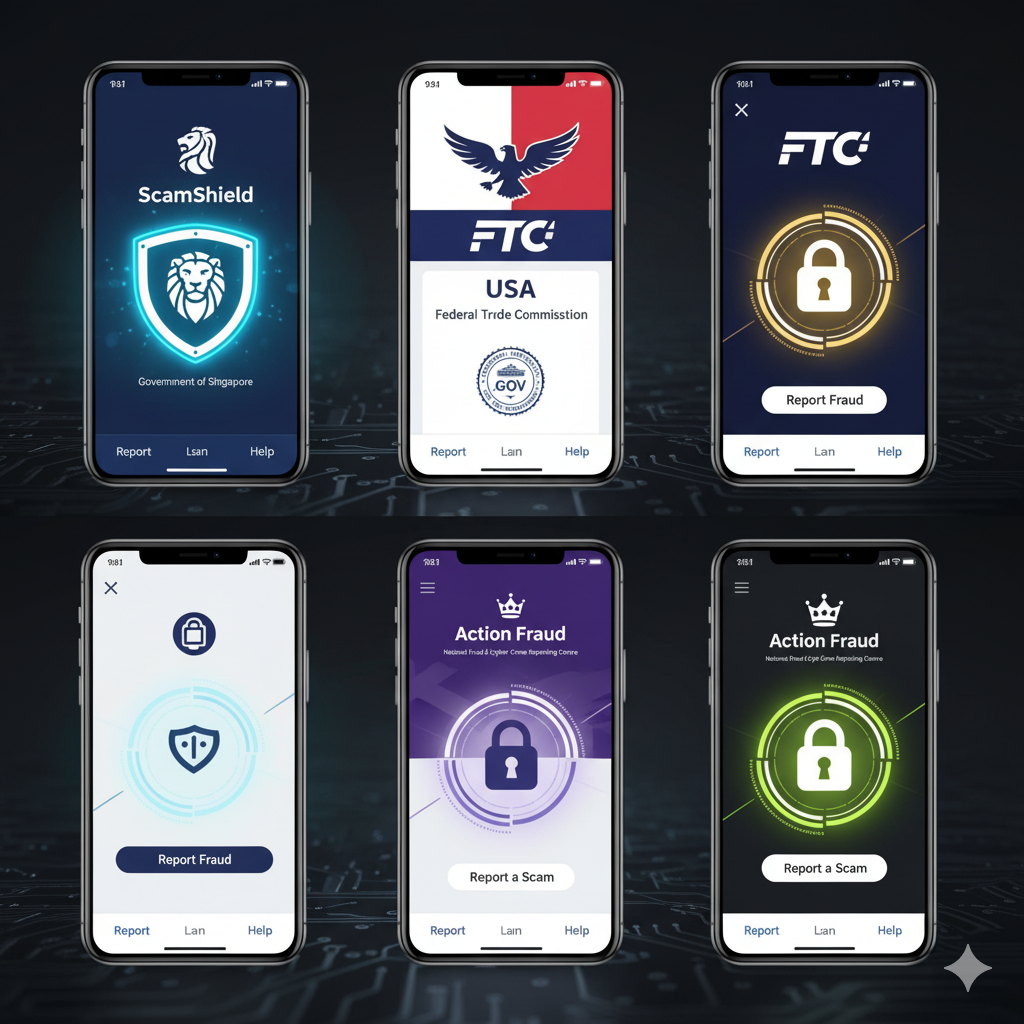
- For Residents in Singapore: You must ADD the ScamShield app to your phone. It’s an official initiative by the Singapore Police Force and Open Government Products. It automatically blocks calls from known scam numbers and uses an algorithm to filter out scam SMSes (now including Telegram and WhatsApp message checking). Call the 24/7 ScamShield Helpline at 1799 if you are unsure about something.
- Globally: Look for your country’s official anti-scam centre, often managed by the Police, Ministry of Interior, or Consumer Protection agencies:
- Australia: Check Scamwatch (run by the ACCC).
- United Kingdom: Look to Action Fraud (the national reporting centre for fraud and cyber crime) and resources from the National Cyber Security Centre (NCSC).
- United States: The FTC (Federal Trade Commission) and the FBI’s IC3 (Internet Crime Complaint Center) are the primary reporting and resource hubs. The Global Anti-Scam Alliance (GASA) also provides reports and intelligence worldwide.
💖 Reality Check & Acceptance: Preparation is Not Pessimism
The hardest part of this vigilance is accepting that sometimes, being a good, trusting person makes you a target. We grew up in a world where a handshake was a promise, and a letter with an official logo was legitimate. That world is gone.
The most profound lesson of Active Aging is that nothing is fixed. Not our health, not our relationships, and certainly not the security landscape. But adapting to change with conscious preparation is not pessimism; it’s the ultimate act of self-care and self-respect in the digital age.
We’ve worked too hard, saved too diligently, and earned our independence too fiercely to let a cynical, anonymous criminal snatch it away. We must be conscious, we must be careful, and we must be authentic—about our past mistakes, about our savings goals, and about the fact that we are all, at the end of the day, still beautifully, wonderfully human.
Stay sharp, my friends. Your peace of mind is worth more than gold.
 Live Life
Leave a comment