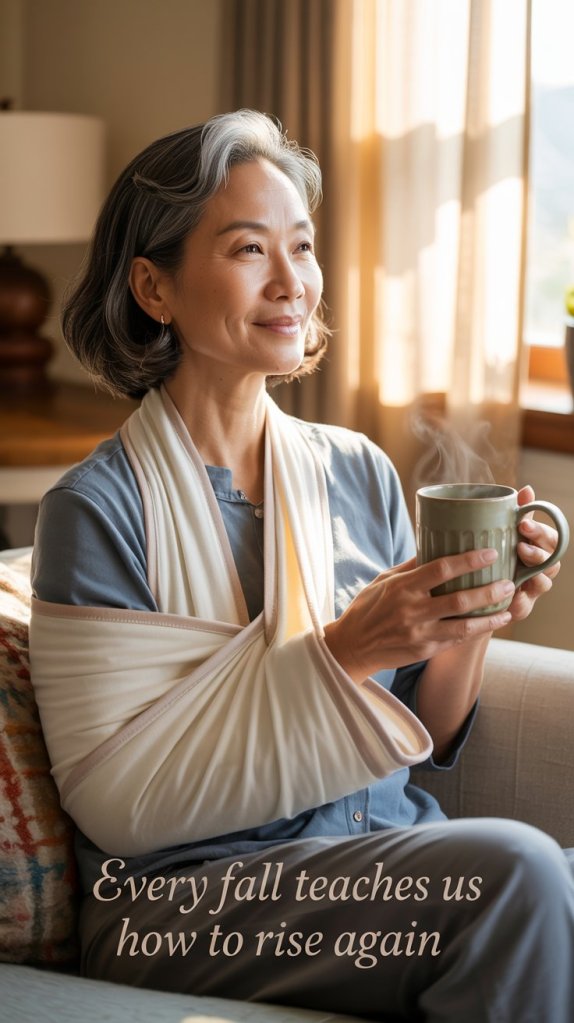
It’s one of those things we often push to the back of our minds. “Oh, that won’t happen to me,” we think. Or, “I’m careful enough.” Yet, as we move into our 50s, 60s, and beyond, the risk of a fall isn’t just an inconvenience; it’s a watershed moment that can drastically reroute the course of our well-being and independence.
I’ve been doing a lot of reading and reflecting on this lately, and the statistics are truly eye-opening. For many older adults, a fall isn’t just a bruise or a fracture; it’s the catalyst for a much wider decline—a spiral of subsequent ill health, fear-driven immobility, loss of confidence, and a sudden, sharp decrease in quality of life. The injury heals, but the psychological impact and the resulting self-imposed limitations often linger much longer. The fear of falling, ironically, becomes a major risk factor for subsequent falls.
This isn’t a post designed to scare us into staying indoors. Quite the opposite. It’s about being clear-eyed and proactive. It’s about acknowledging the reality of our changing bodies and environments so that we can take smart steps to keep embracing life with both feet firmly planted.
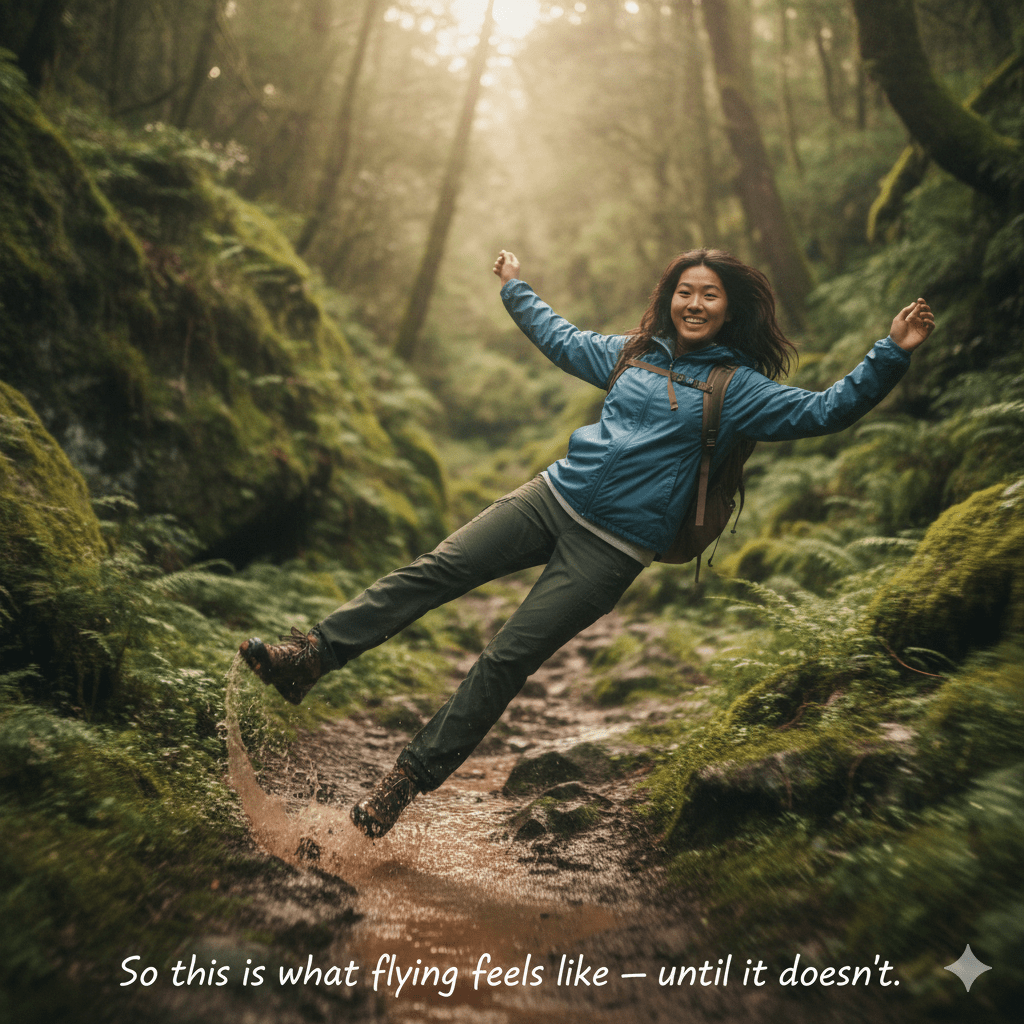
A Young Fall, A Lasting Lesson
I’ve been wary of falls since my twenties. Back then, I took a nasty spill while rushing down a wet slope during a hike. My knees were scraped, my ego bruised, and I remember thinking, “So this is what flying feels like — until it doesn’t.”
That incident stayed with me. Not because of the pain, but because I learned how quickly a simple misstep can change things. Over the years, I’ve watched friends, neighbors, and relatives struggle with the aftermath of a fall — particularly as we age.
We don’t bounce back the same way. Sometimes, we don’t bounce back at all.
Fast Forward: My Slippery Saturday
And yet, here I was — decades later — making my own unplanned landing.
It began innocently enough. My shower decided to act up, so I stepped out with wet feet to check the water heater. One wrong pivot, and boom — I went down. My left arm caught my fall (thankfully), but the impact left me sore and shaken.
At first, I told myself, “It’s fine, just a bruise.” But by the next morning, my arm throbbed and my hand felt oddly stiff. A small voice inside said, Go get it checked.
At first, I told myself, “It’s fine, just a bruise.” But by the next morning, my arm throbbed and my hand felt oddly stiff. A small voice inside said, Go get it checked.
I’m glad I listened.

The Treatment: East Meets West, but I Chose the East This Time
When I went down hard on my left arm, the pain and bruising were immediate and intense. I knew, based on the severity of the impact, that something was seriously disrupted beneath the skin.
Rather than immediately heading for the hospital, I decided to trust my long-standing relationship with Traditional Chinese Medicine (TCM). For many years, I’ve relied on TCM for treating external injuries and deep tissue trauma, and I felt strongly that this was the path for me.
The session unfolded in three parts — each one targeting a different aspect of healing.
Step 1: Cupping to Release Stagnation
She started with cupping therapy. As the glass cups were placed and suctioned along my upper arm and shoulder, I could feel a deep pulling sensation — not painful, but oddly relieving.
The goal, she explained, was to draw out stagnant blood and improve circulation around the injured area. When the cups were removed, faint purple marks bloomed on my skin — evidence of trapped energy and poor blood flow being released.
Almost immediately, the dull ache eased, replaced by a sense of warmth and lightness. It felt like my arm could “breathe” again.
Step 2: Acupuncture to Unblock Energy Flow
Next came acupuncture. Thin needles were gently inserted into points around my arm, shoulder, and wrist — each one targeting the meridians linked to muscle tension and inflammation.
I lay still, feeling tiny waves of energy spreading across my arm — subtle, rhythmic, and surprisingly soothing. Acupuncture, as my practitioner reminded me, doesn’t just treat the surface injury; it restores the qi, the body’s vital energy flow, ensuring that healing happens from within.
By the end of the session, the heaviness in my arm had lifted, replaced by a steady hum of circulation.
Step 3: Therapeutic Massage to Restore Mobility
Finally, she applied a gentle, rhythmic massage with medicated oil — the kind that smells faintly herbal and comforting. The massage helped loosen the surrounding muscles, disperse the remaining tension, and restore mobility.
She told me to rest the arm, keep it warm, and return in a few days for follow-up.
By the next morning, I noticed a difference: less stiffness, more ease in movement. Over the next few days, the bruise lightened, and the pain subsided.
Western treatment would likely have involved an X-ray, anti-inflammatory medication, and perhaps a compression bandage — all valid approaches. But for me, TCM worked because it treated the whole body, not just the site of pain.
What mattered most was getting help promptly and choosing the path that felt right for my body.
Prevention Is Wisdom, Not Worry
We may not control every fall, but we can minimize the odds. And when we do fall, we can recover better if we’re fit, mindful, and proactive.
So here’s my personal checklist — part reminder, part resolution — for staying steady, both literally and metaphorically.

My Fall-Prevention Pledge: Small Habits, Big Protection
1. Dry Feet, Dry Floor
The simplest rule — and the one I broke. I now keep a towel right by the shower door and a non-slip mat with strong grip. Wet tiles are deceptive; they look harmless, but they’re silent traps.
2. Good Lighting Matters
Soft night lights in corridors and bathrooms make a world of difference. I use motion-sensor lights that switch on gently when I move, saving me from stubbed toes and late-night surprises.
3. Sensible Footwear — Indoors Too
Gone are the days of slippery slippers. I now wear anti-slip indoor shoes with firm soles, and outdoors, I look for shoes with grip and ankle support. Worn-out soles are invisible hazards — I replace them before they “retire” me first.
4. Balance and Strength Training
Falling isn’t just about surfaces — it’s about stability. Yoga, Pilates, and tai chi build balance and flexibility. Even standing on one leg while brushing teeth helps the body remember its center of gravity.
5. Designing My Future “Adult-Proof” Home
One day, when I move into my next home, I’m going to make it as “adult-proof” as possible — not child-proof, but adult-proof. The kind of space that quietly supports well-being, safety, and ease.
That means clear, clutter-free walkways (no cords or stray magazines lurking in the dark), non-slip flooring, and plenty of good lighting where I need it most. The bathroom, for instance, will have grab bars that blend seamlessly with the décor, anti-slip tiles that don’t scream “hospital,” and shelves placed within easy reach — design meeting dignity.
It’s not about fearing falls. It’s about designing for freedom — creating an environment that lets me move confidently and age on my own terms.
6. Outdoor Awareness
Uneven pavements, wet curbs, or surprise potholes — I now walk mindfully instead of multitasking with my phone. Polarized lenses help spot glare and puddles in both Singapore’s humidity and Bangkok’s sudden showers.
7. Listen to Your Body
Some days, our balance is off, or our energy low. I’ve learned to pause, breathe, and move deliberately instead of rushing. Our bodies always whisper before they shout.
8. Don’t Rush
Aging well doesn’t mean moving fast — it means moving wisely. Whether stepping out of bed or off a curb, slow is smooth, and smooth is safe.
The Emotional Side of Falling
The physical pain fades; what lingers is vulnerability — that sharp realization that our bodies, no matter how cared for, are not indestructible.
When I told a friend about my fall, she teased, “You? Miss Mindful? Really?”
Exactly. Falls don’t discriminate.
But here’s what they can do — they can teach humility, patience, and gratitude.
As I rested my arm and watched sunlight pour into the sitting room, I felt thankful. Thankful it wasn’t worse. Thankful I sought help early. Thankful for the reminder that self-care isn’t just kale salad and fitness trackers — it’s also about practical awareness and respect for the body that carries us through life.
Aging Actively Means Adapting Wisely
When we talk about Active Aging, we often imagine adventure — hiking, dancing, traveling. But sometimes, active aging means slowing down to stay upright. It’s about knowing our limits and honoring our instincts.
Falling taught me — again — that resilience isn’t about never slipping; it’s about getting up, learning, and continuing with more wisdom than before.
Preparation doesn’t make life dull; it makes it sustainable.
Life will throw us off balance — literally and figuratively. What matters is not how hard we fall, but how consciously we rise.
If you’ve taken a tumble recently, take heart. Aging well isn’t about avoiding every mishap — it’s about awareness, humor, and grace in how we recover.
 Live Life
Leave a comment