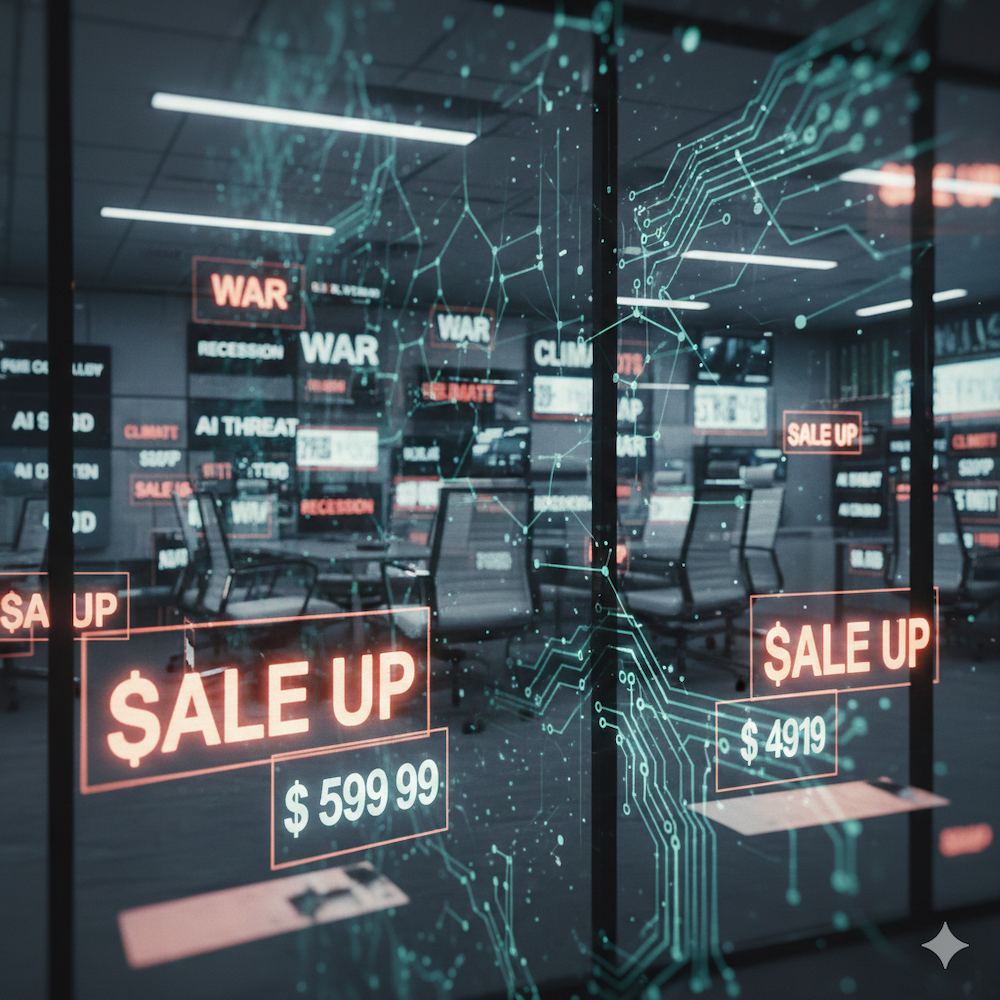
The World Has Changed—and It’s Not Subtle
As we step into 2026, I’ve realized that aging well in uncertain times requires more than just a focus on health—it demands a proactive shift in our financial resilience. With the global economy shifting and purchasing power decreasing due to persistent inflation, I’ve decided that this is the year I prioritize learning new financial skills to protect my future. Rather than feeling overwhelmed by the headlines, I am focusing on inflation-resilient retirement strategies and the quiet confidence that comes from staying curious and informe
The Perfect Storm: AI, Inflation, and the Ageism Barrier
The world has shifted beneath our feet more times in recent years than many of us care to count. Covid reshaped how we work and live, and for many, the period that followed brought higher interest rates that squeezed budgets, plans, and sometimes even long-held assumptions about security.
Just as we caught our breath, hoping for some relief from falling interest rates, a new tariff war erupted. And quietly, persistently, AI has been eliminating the repetitive roles many people built entire careers around—often the very roles that midlife and older workers are told they’re “overqualified” for.
Add ageism to the mix, and it becomes a perfect storm for anyone trying to age well and actively.
I’ve been thinking a lot about what it means to age actively in times like these. Not just physically—though that still matters—but mentally, financially, and emotionally as well. The old playbook of work hard, save diligently, retire comfortably feels increasingly outdated when currencies devalue, purchasing power erodes, and the future looks less predictable than ever.

Why I Decided to Learn How to Trade
Three years ago, I started managing my own finances more intentionally. I had the luxury of time, and with that came the responsibility to pay closer attention. One uncomfortable realisation stood out: an investment-linked insurance product I had bought years earlier was performing worse than if I had simply left the money in a fixed deposit at the bank.
That moment wasn’t dramatic. Just quietly disappointing—and clarifying.
I eventually made the decision to cash out that insurance plan and use the proceeds to learn how to manage my money more actively. It wasn’t a dramatic or impulsive move—just a considered one. I wanted to understand what my money was doing, rather than wondering about it from a distance.
I began learning how to trade, cautiously and humbly. As a novice, I leaned heavily on local experts who generously shared their knowledge on YouTube. I learned how different platforms worked, how markets moved, and—perhaps most importantly—how my own temperament responded to uncertainty.
It’s served me well. More than the financial returns, though, it’s given me something invaluable: a framework for thinking about change, risk, and adaptation.
But I’m not stopping there. Given how uncertain the future looks—with currency devaluation accelerating, our dollars buying less each year, and geopolitical tensions adding fuel to economic instability—I’ve enrolled in Ray Dalio’s full program . If I’m going to navigate these waters, I want to learn from someone who’s spent decades studying economic cycles, debt, inflation, and how wealth actually gets preserved across turbulent times.
Building Your Foundation: Recommended Reading
- “Principles for Dealing with the Changing World Order”
- Why it matters now: This is Dalio’s roadmap for 2026. It explains why we see high inflation, political tension, and currency shifts by looking at the last 500 years of history. It helps turn “uncertainty” into “patterns.”
- “Principles: Life and Work”
- Why it matters now: Before you can manage money, you have to manage your mind. This book offers a framework for “radical transparency” and truth-seeking, which is essential when traditional career paths (like the ones AI is disrupting) begin to fade.
- “Principles for Navigating Big Debt Crises”
- Why it matters now: For a deeper dive into why interest rates and purchasing power fluctuate so wildly. It’s technical but provides the “quiet confidence” that comes from understanding the game.
Disclosure: I am an affiliate for these titles and may receive a small commission if you choose to purchase through the links above.
The Intersection of Purpose and Sustainability
Here’s what I’ve learned about aging actively: it’s not just about staying busy. It’s about doing things that resonate with who you are now, not who you were twenty years ago. It’s about pursuing what genuinely interests you, because that’s the only way it becomes sustainable. That’s the only way you’ll have fun while doing it.
Financial literacy, for me, checks all those boxes. It engages my mind. It addresses real concerns about my future. It gives me a sense of control when so much feels beyond our control. And honestly? I find it fascinating.
The aging mind doesn’t need to slow down—it needs engagement. It needs challenge. It needs to feel relevant and capable. Learning to understand markets, economic cycles, and wealth preservation isn’t just practical; it’s cognitively enriching in ways that crossword puzzles and Netflix binges simply aren’t.

What Does Aging Well Mean Now?
I think aging well in 2026 means something different than it did even a decade ago. It means:
Mental resilience — keeping your mind active not through busywork, but through genuine intellectual challenge and continuous learning.
Financial adaptability — understanding that the old rules may not apply, and being willing to learn new strategies for protecting and growing what you have.
Emotional fortitude — accepting uncertainty without surrendering to helplessness, and finding agency where you can.
Authentic engagement — doing things because they matter to you, not because someone else says you should.
We’re living through a time when experience alone isn’t enough. The landscape keeps shifting. The skills that served us well may not serve us tomorrow. And age discrimination means we can’t always count on traditional employment to carry us through.
But here’s the empowering part: we get to choose how we respond.

An Invitation to Reflect
I’m sharing this not because I have all the answers—far from it—but because I suspect many of you are grappling with similar concerns. You may have felt the squeeze of inflation, worried about job security in an AI-driven economy, or encountered ageism and wondered how to stay relevant, valuable, and engaged.
So I’ll leave you with this:
How are you preparing yourself for change—not just financially, but mentally and emotionally?
For me, aging actively isn’t about fighting time. It’s about evolving with it—choosing engagement over retreat. The world may be uncertain, but our response to it doesn’t have to be.
Summary: My 2026 Financial Playbook
The Challenge: Recognizing the “perfect storm” of AI disruption and inflation.
The Strategy: Shifting from a passive mindset to actively building financial resilience.
The Tool: Enrolling in the Ray Dalio program to learn the principles of “quiet confidence”.
The Next Step: Starting with the recommended reading list to understand the global shifts affecting us all.
What’s in your playbook?
We’re all navigating these shifts together. Have you started exploring new financial skills for 2026, or is there a specific ‘principle’ that has helped you stay grounded lately? I’d love to hear your thoughts in the comments below!
 Live Life
Leave a comment