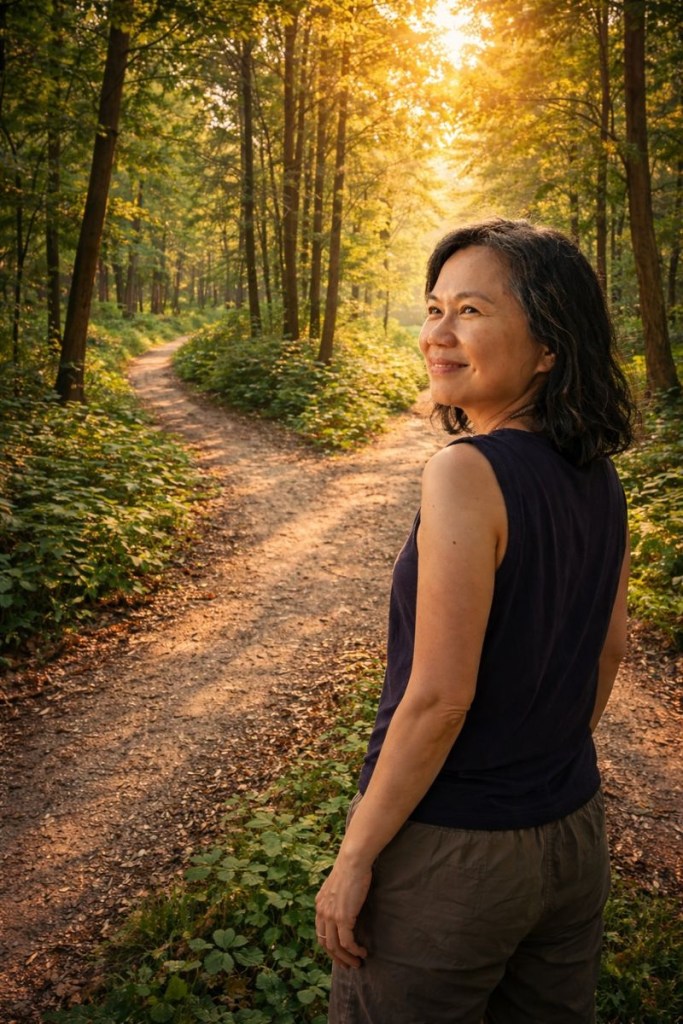
Understanding the transition from a wide network to a deep inner circle in midlife.
Every New Year or birthday, it happens.
A message appears from someone I haven’t heard from in ages. A former colleague. An old friend. Someone who once knew a version of me very well—and then, somehow, life moved on.
I usually smile, reply warmly, and assume that’s where it will end. A brief digital nod to a shared past before we both return to our respective lives.
But this year, I did something different.
Instead of stopping at “Great to hear from you,” I suggested a follow-up video call to an ex-colleague I’d met years ago while working in Hong Kong. She has since migrated to Toronto. Different city, different life, different rhythm altogether. I wasn’t expecting much—just a friendly catch-up, really.
We ended up talking for an hour.
And it surprised me how much we still had in common.
And that’s when I thought about the friend I lost. The one I’d known for over twenty years.

The Confession I Need to Make
Here’s the part that’s hard to admit: I was the one who changed.
For the longest time, I told myself the friendship just “ran its course” or that we’d “grown apart”—those convenient phrases we use when we don’t want to look too closely at what actually happened. But when I finally stepped back and reviewed it objectively, I had to face an uncomfortable truth: I had evolved into someone who could no longer play the role I’d always played in that friendship.
I don’t even remember exactly when it started. Maybe it was a gradual shift in my values, or maybe I just got tired of being the person I’d always been in that dynamic. What I do know is that at some point, continuing that friendship felt exhausting. Not because they were a bad person—they weren’t. But because they needed a version of me that I’d outgrown.
And that’s when we fell out. After twenty years.
You Can’t Play Old Roles in a New Life
The thing about personal growth that no one really tells you is this: not everyone will be happy about it. Some people need you to stay the same because your role in their life depends on it. You’re the listener, or the cheerleader, or the one who always agrees, or the one who never challenges them. When you change, when you can no longer be that person, the entire foundation of the relationship starts to crack.
The really good friends? They either evolve alongside you or they accept the new you. They might be surprised by your changes, maybe even a bit thrown off at first, but they adapt. They’re curious about who you’re becoming. They make room for the person you are now, not just the person you were when you first met.
But then there are those friendships that can’t survive your evolution. And here’s what I’ve learned: that’s not actually a failure. It’s just incompatibility. The friendship served its purpose for a season of your life, and now that season has ended.
It still hurts, though. Especially when it’s twenty years.

Life is a Revolving Door
I’ve started thinking of life as a revolving door. People come in, people leave. Some circle back around for another rotation, while others exit and never return. And then there are the rare few who somehow manage to exit at the same destination as you.
But here’s the thing—even those few who reach the same destination might be taking completely different transportation to get there. My Toronto friend and I discovered this on our call. We’ve taken such different paths since Hong Kong—different careers, different countries, different life choices—yet we still found ourselves with so much in common. The friendship could handle the distance and the changes because neither of us needed the other to be who we were ten years ago.
The friend I lost? They needed me to stay on the same train I’d always been on. And I couldn’t do it anymore.
How to Make Peace with It
If you’re going through something similar, here’s what I wish someone had told me earlier:
First, recognize when you’ve outgrown a friendship without guilt. The signs are there if you’re willing to see them. Do you feel drained after interactions? Are you censoring yourself constantly? Do you feel like you’re performing a version of yourself that no longer exists? These aren’t signs you’re a bad friend. They’re signs you’ve changed.
Second, step back and review objectively. Not every friendship ending is someone’s fault. Sometimes people just grow in different directions. Try to see it from both sides. Yes, you changed—but what were you changing from? Were you playing a role that was never really authentic? Were you staying small to make someone else comfortable?
Third, accept that “it’s okay” is a complete sentence. You don’t need to justify your growth. You don’t need to apologize for becoming someone new. It’s okay that some people can’t come with you. It’s okay to outgrow friendships, even long ones. It’s okay to choose yourself.
Finally, stay open. Just because one friendship ended doesn’t mean you close the door on all of them. The revolving door keeps turning. New people will come in. Old people might circle back. And the ones who are meant to stay? They’ll find a way to evolve with you or accept you as you are.

The Reminder I Needed
That video call with my Toronto friend reminded me of something important: the right friendships can handle change. They can handle distance, evolution, and years of silence. They can pick up where they left off because they’re not based on you playing a fixed role—they’re based on genuine connection that transcends who you were or who you’ve become.
I don’t regret losing that twenty-year friendship anymore. I’ve made peace with it. That person knew a version of me that needed to exist at that time, and I’m grateful for what we shared. But I’m also grateful that I’ve grown past needing to be that person.
If you’re reading this and you’ve lost a friend because you changed, I want you to know: it’s okay. Growing means some people will leave. But it also means you’re becoming someone capable of deeper, more authentic connections. Someone who doesn’t have to perform or pretend or play roles that don’t fit anymore.
The revolving door keeps turning. Some people exit. Some people stay. And you? You keep growing.
And that’s exactly as it should be.


 Live Life
Leave a comment