The Universal Menu Moment
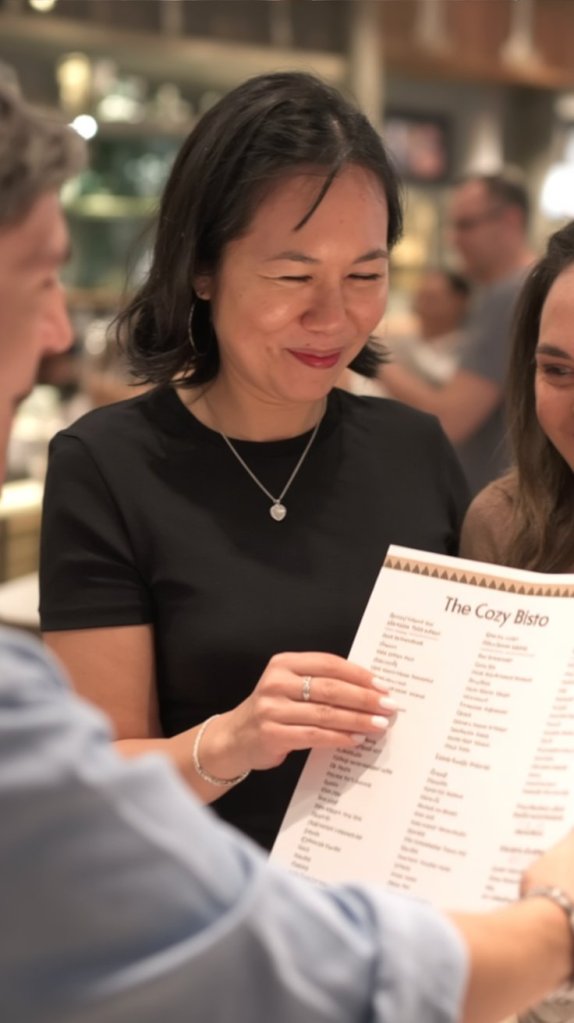
If there’s a universal sign that eye changes have begun, it’s the menu moment. And for most of us, it arrives sometime in our 40s. Not with drama, not with pain, just with mild inconvenience and a lot of denial.
It is a scene we all know too well: a group of friends sitting down for dinner, and as soon as the menus are handed out, the “short arm syndrome” begins. People start stretching their arms further and further back, squinting under phone flashlights to see the text. We laugh and joke that “aging is catching up,” but this common struggle actually has a name: Presbyopia.
As someone in my late fifties who advocates for active aging, I’ve realized that while we joke about it, keeping our “windows to the world” clear is serious business.
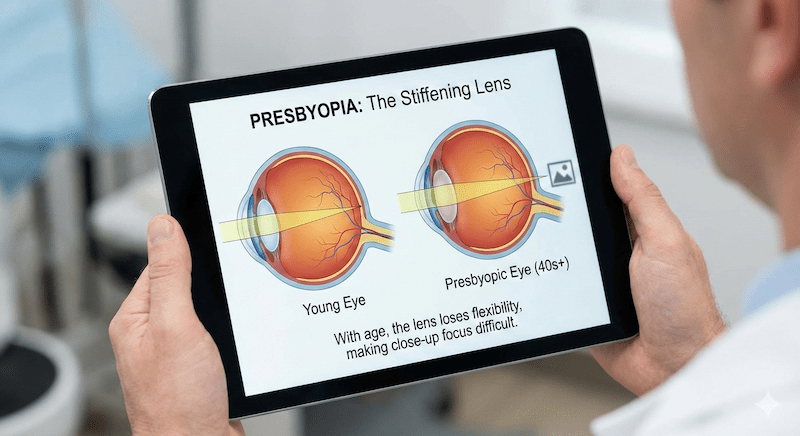
It sounds serious, but it’s simply the eye’s natural lens becoming less flexible with age. Translation? Close-up vision gets harder. Almost everyone experiences it eventually.
It’s not a disease. It’s not a failure. It’s just biology doing what biology does.
Why Our 40s Are a Quiet Turning Point
I think the 40s are an interesting decade. We’re still active, busy, capable—and yet subtle signals start appearing. Eyesight is often one of the first.
This is also the stage where we get to choose our posture toward aging.
Do we joke, ignore, and hope for the best?
Or do we notice, learn, and make small adjustments that serve us well later?
For me, active aging has never been about pretending nothing changes. It’s about noticing earlier and responding calmly.
What I Do to Support My Eyes (Without Expecting Miracles)
Because I blog about active aging, eyesight is one area I’ve been intentionally paying attention to. Not obsessively. Just… attentively.
Food as Participation, Not a Promise
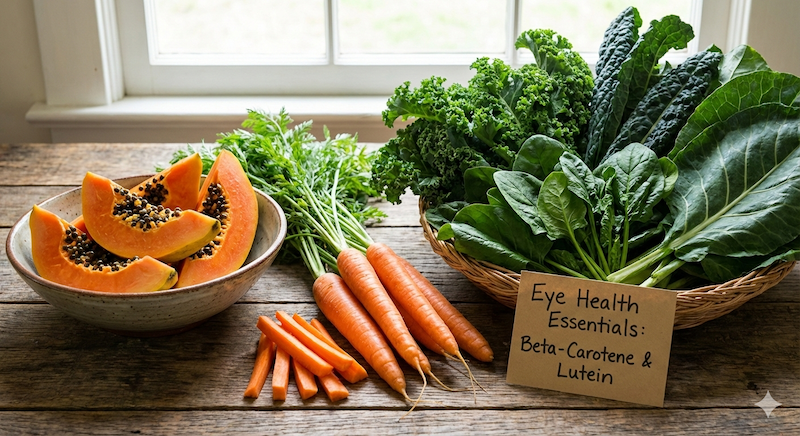
I’ve been a good gal. I make a point to eat more foods rich in beta carotene, like carrots, papaya and my greens. I enjoy them anyway, so it doesn’t feel like punishment disguised as health.
Do I believe these foods will stop aging in its tracks? Of course not.
Do I believe they support eye health as part of an overall lifestyle? Yes.
That distinction matters.
I’m not chasing miracles. I’m participating in my future as best I can.
Habits That Make Everyday Life Easier
Beyond food, there are small, unglamorous habits that genuinely help:
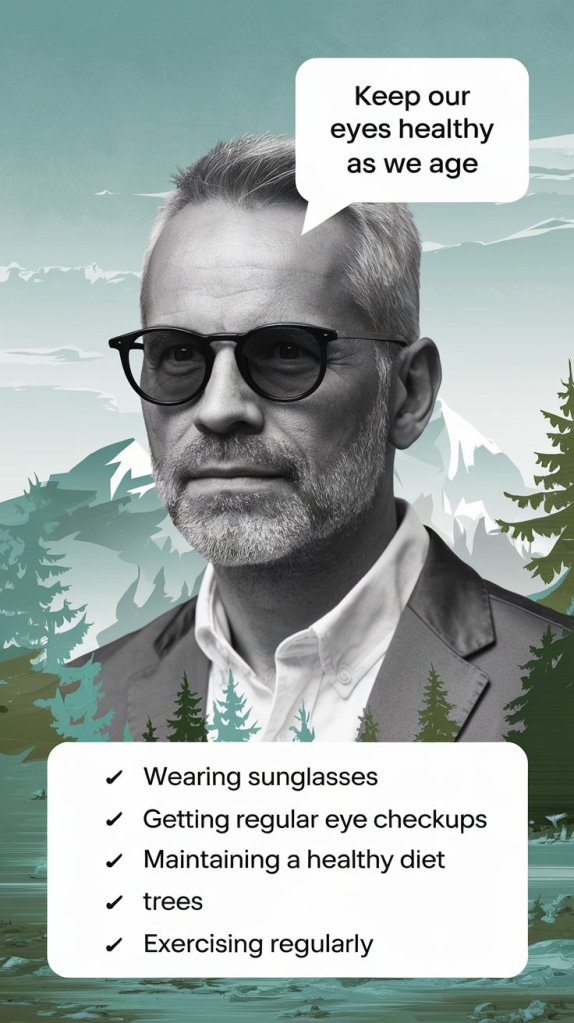
- Getting regular eye exams, even when nothing feels “wrong”
- Using good lighting (and forgiving dim restaurants)
- Resting my eyes during long screen sessions
- Wearing sunglasses to protect against long-term sun damage
None of these are dramatic. That’s the point.
Active aging, in my experience, is mostly made up of quiet, consistent choices.
A Gentler Way to Think About Aging Eyes
One thing I’ve learned from attending eye health talks is this: fear usually comes from not knowing what to expect.
There are eye conditions that become more common as we age. Some are very treatable. Some need monitoring. Almost all benefit from early detection. Knowledge turns vague anxiety into practical action.
And action feels empowering.
Also, can we normalize the idea that using reading glasses is not a personal defeat? They are tools. Like better shoes. Or clearer instructions. Life improves when we stop making things harder than they need to be.
Looking Ahead Without Panic
If presbyopia is often the opening chapter, it’s not the whole book. Other eye conditions may enter the picture later, which is exactly why paying attention early matters.
Not to worry. Not to catastrophize. Just to be informed.
I’ll be sharing more about common age-related eye conditions in a future post. For now, I’ll leave you with this thought:
Aging eyes don’t mean shrinking lives.
They simply invite us to look after ourselves with a little more intention—and maybe a bit more light on the menu.
And honestly? That seems like a fair trade.
 Live Life
Leave a comment