Lately, I’ve noticed a pattern among people who are, by most standards, very successful. The kind of success many of us are encouraged to chase—strong careers, financial security, beautiful homes, full calendars.
And yet, beneath the polish, something feels unsettled.
It’s what made me start thinking about the paradox of success: how the climb can look impressive from the outside, and still feel unexpectedly isolating from the top.
It’s not always obvious. There’s no dramatic unraveling or loud dissatisfaction. More often, it shows up as a quiet restlessness. A sense of searching. A subtle feeling that despite having done everything “right,” happiness still feels just out of reach.
Seeing this repeatedly has made me reflect—not on their lives, but on how we understand happiness in the first place.
The Arrival Fallacy
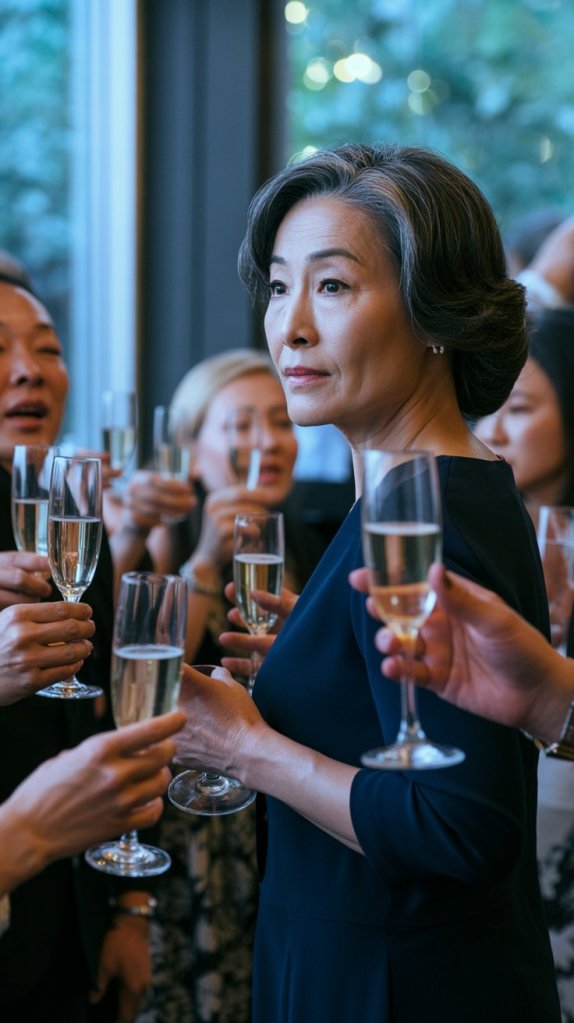
We are often led to believe that happiness is a destination—a specific zip code or a certain number of zeros in a bank account. Some of my friends have reached those destinations, but they’ve found the air there is surprisingly thin.
When your life is a masterpiece of accumulation, you often find yourself in a “Golden Cage.” You spend so much energy maintaining the prestige, the properties, and the performance that there is little room left for the soul to breathe.
What’s striking isn’t ingratitude or complaint. It’s the quiet reaching. The sense of always needing the next thing, even when the current one should be enough. There’s an old saying that the higher you climb, the lonelier it gets. Perhaps because the climb requires constant maintenance—of appearances, expectations, and structures that no longer quite fit.
And from the outside, everything still looks perfect.
What Success Gives Us—and What It Can’t
Success brings real gifts. Comfort. Security. Options. Independence. It would be dishonest to deny that these things matter.
But success has limits we rarely talk about.
It cannot compensate for emotional disconnection.
It cannot manufacture intimacy.
It cannot create peace where there is quiet unrest.
A relationship can look intact and still feel empty. A life can be full and still feel misaligned. And when everything appears “good enough,” it becomes surprisingly difficult to name what’s missing—especially when others might gladly trade places with you.
Gratitude becomes an expectation. Silence becomes easier than honesty.
Zhi Zu: Knowing When Enough Is Enough
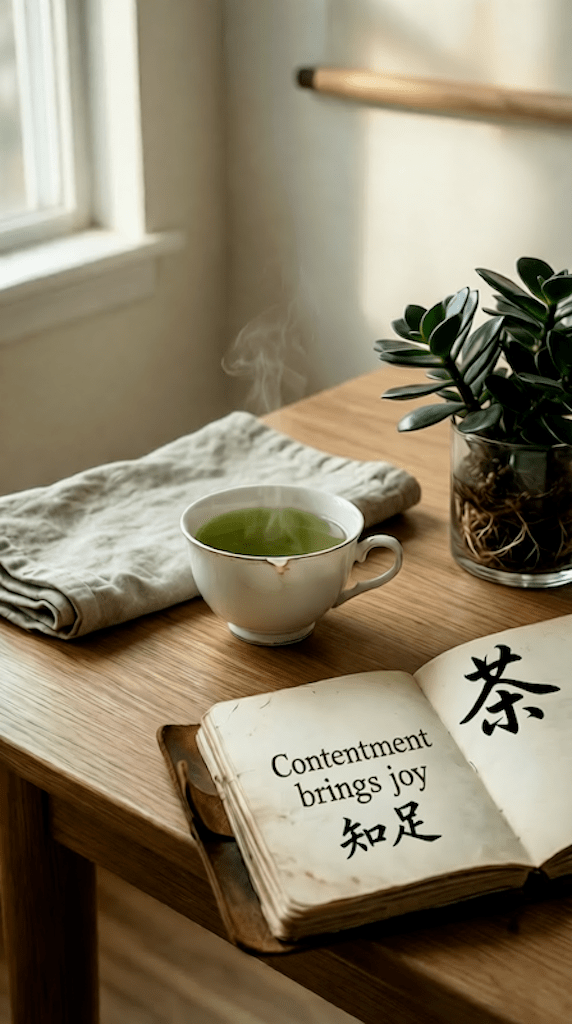
There is a phrase in Mandarin that has stayed with me for years: 知足 (Zhi Zu). It roughly translates to knowing contentment—or more simply, knowing when enough is enough.
Zhi Zu is not about having little.
And it is not about giving up ambition.
It is the understanding that contentment doesn’t come from accumulation, comparison, or constant striving. It comes from recognizing sufficiency—from being able to say, with clarity and calm, this is enough for me.
In a world that continuously asks us to want more, this idea feels almost radical.
Living With Less—and Feeling at Ease
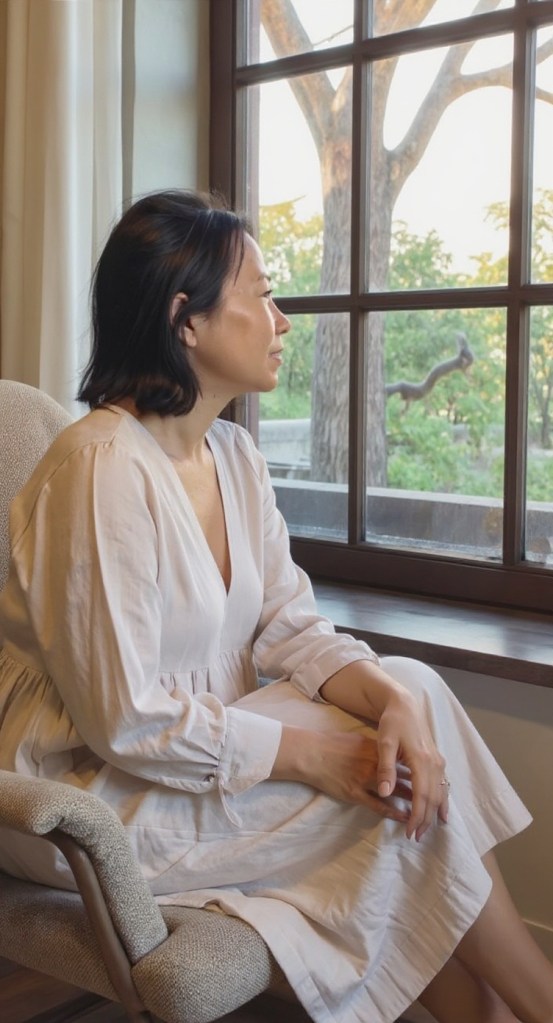
By most outward measures, I have less than many people around me. Less financial certainty. Fewer impressive milestones. A smaller, quieter life.
And yet, I feel content.
Not euphoric. Not untouched by difficulty. Just… grounded.
I don’t wake up feeling like my life needs to prove itself. I don’t feel the constant pressure to upgrade, optimize, or explain my choices. Somewhere along the way—perhaps without fully realizing it—I began practicing Zhi Zu.
I stopped measuring my life against other people’s outcomes.
I stopped postponing peace until some future version of myself arrived.
I learned to live inside my life instead of constantly evaluating it from the outside.
The question isn’t whether to strive or settle, whether to travel or stay home. It’s whether we can learn to recognize when we have enough, and let that recognition set us free. Free to stop performing and start connecting. Free to stop fleeing and start feeling. Free to be present to the life we’re actually living, instead of perpetually reaching for the one we think will finally satisfy.
That’s the invitation of zhi zu. Not to have less, but to need less. Not to stop moving, but to stop running. Not to lower our standards, but to raise our awareness of what actually matters.
My friends are still searching. And I hope, with all my heart, that they find what they’re looking for. But I suspect what they’re looking for won’t be found in the next achievement or the next adventure.
It will be found in the moment they finally stop searching and start seeing what’s already here.
Contentment, I’ve learned, is not passive. It’s a quiet discipline.

Why Contentment Is So Often Misunderstood
Contentment is frequently mistaken for complacency. For settling. For a lack of ambition.
But Zhi Zu doesn’t reject growth—it rejects endless dissatisfaction.
It asks a different question: What is actually enough for me?
In a culture that rewards striving, choosing sufficiency can feel almost rebellious. But it takes courage to stop chasing what you don’t truly need. It takes clarity to say, This life, as it is, is worthy of my presence.
The Quiet Loneliness Behind Achievement
Loneliness doesn’t belong to any one circumstance.
It can exist inside relationships that continue in form but not in spirit. It can exist in independence and freedom, too. It can exist in success, status, and full calendars.
The common thread isn’t wealth or partnership—it’s disconnection. From self. From truth. From contentment.
And the higher the stakes, the harder that reconnection can be.

A Different Kind of Wealth
I don’t feel deprived. I feel quietly rich.
Rich in time.
Rich in emotional honesty.
Rich in the freedom of not pretending.
There is a deep relief in not needing your life to look impressive. In not confusing motion with meaning. In allowing contentment to be enough—without apology.
Perhaps happiness isn’t elusive at all. Perhaps it simply doesn’t respond well to pressure or performance.
Perhaps it arrives when we practice Zhi Zu—when striving softens, comparisons loosen, and we finally recognize that enough has been here all along.
I don’t have it all.
But I know when I have enough.
And that feels like a very good place to stand.
What does your “enough” look like today?
 Live Life
Leave a comment