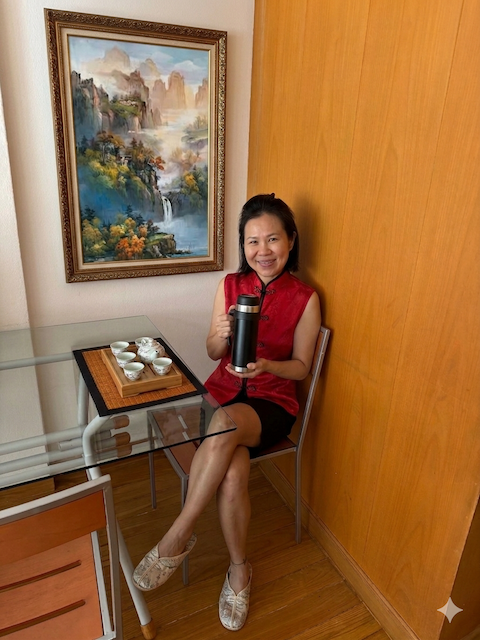
There’s a meme doing the rounds in the West right now. It’s called Chinamaxxing — and it involves a generation of Gen Z Westerners posting videos of themselves drinking hot water, wearing house slippers, practising tai chi and proudly buying “Made in China” products, all while announcing with a mixture of irony and genuine sincerity that they are entering “a very Chinese time in their life.”
I find this equal parts amusing and vindicating.
Because I spent roughly the first 45 years of mine going in the exact opposite direction.
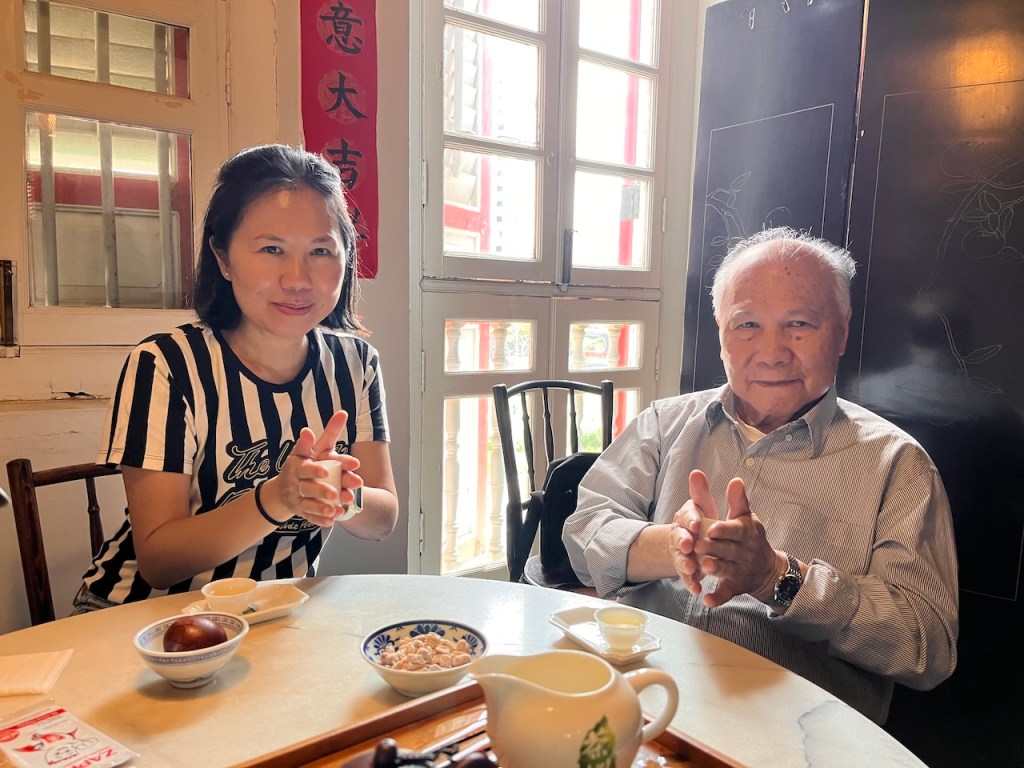
The McDonald’s Kid: A Singaporean Chinese Origin Story
October 1979. Singapore. McDonald’s opens its very first outlet, and I am there. Not just as a curious visitor — I made it my default morning routine, showing up before school like it was a second home. I was Chinese by race, Singaporean by upbringing, but my operating language was English, my cultural heroes were on MTV, and Mandarin was strictly school-timetable territory. Present enough to pass exams. Absent everywhere else.
This wasn’t unusual. This was Singapore in the late 70s and early 80s — a young, newly independent city-state where Western-equals-modern was practically the social operating system. To be English-educated was to be forward-looking. The future had air-conditioning and a Quarter Pounder. The past had calligraphy and herbal soup.
My father tried — and to be fair, he was more sophisticated about it than pure cultural immersion by force. He took me to see Raiders of the Lost Ark. Every James Bond film that came through Singapore. He understood the Western canon perfectly well and made sure I did too. But woven in alongside all of that were Chinese shows from the mainland — the epic historical dramas, the weight-of-civilisation stuff — balanced with the more commercial, palatable offerings from Hong Kong and Taiwan. Love stories. Kung fu films. The crowd-pleasers.
And then there was Liu San Jie (刘三姐) — a Chinese musical film where farmers sang folk songs against karst landscapes so stunning they looked painted. It was, I can tell you with confidence, absolutely no Sound of Music to my twelve-year-old ears.
And yet. Ask me today which of those shows I actually remember, almost five decades later — and it’s not the slick Hong Kong rom-coms or the Taiwan crowd-pleasers that have stayed with me. It’s the epic mainland productions. The ones I sat through dutifully while wishing I was watching something with car chases. Those images lodged somewhere deep and quietly refused to leave.
My father, it turns out, knew exactly what he was doing. He was playing a very long game.

China’s Digital Transformation: From Reading About It to Living It
For years — accelerated by the Covid pause and then by caregiving duties that kept me closer to home — I’d been reading seriously about China’s digital transformation. The super apps. The seamless payments infrastructure. The high-speed rail network stitching an entire continent together. I understood it intellectually. I found it impressive on paper.
But I hadn’t felt it yet.
My father passed in June 2024. A week later, I was on a plane to Guangzhou — a short teaser trip, a friend in tow, a toe back in the water. But standing there, phone out, navigating a transformed city with WeChat Pay handling everything from street food to transport without a single fumble — something clicked that no amount of reading had managed to click for me.
And I finally understood why he had so much faith in this country — faith I honestly hadn’t shared before. He didn’t just understand China sentimentally. He understood the vision. The resilience. The quiet confidence of a civilisation that was never really down, just patient.
Today, over 80% of daily transactions in China’s Tier 1 to Tier 3 cities are processed via mobile payments — and experiencing that frictionless reality firsthand is genuinely something else. This isn’t a fintech statistic. It’s a different relationship between people, money and daily life. You don’t fully get it until you’re standing at a street stall in Guangzhou at 8am, paying for your breakfast with a tap, surrounded by everyone else doing exactly the same thing as if it’s the most natural thing in the world.
Because for them, it is.
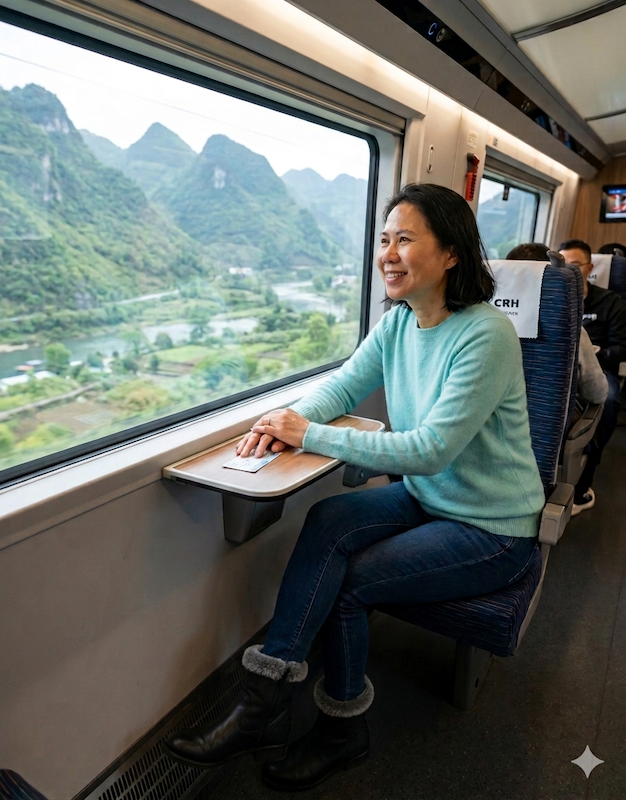
DIY on the High-Speed Rail: Jiuzhaigou and the Art of Being Wrong
2025 I went back. Properly this time
Solo. DIY. No tour group, no guided itinerary — just me, my phone, Google Translate on standby and a booking on China’s high-speed rail network, which now stretches over 45,000 kilometres, connecting virtually every major city and tourist destination across the country — including, remarkably, the mountainous route toward Jiuzhaigou.
For the uninitiated: this isn’t just fast transport. It’s a demonstration of what coordinated infrastructure looks like at genuine scale. As someone who blogs about active aging and refuses to accept that adventure travel has an expiry date — navigating this system solo, at 58, was one of the more satisfying things I’ve done recently. If you want the practical nuts and bolts of how to do it yourself, my earlier DIY China travel piece has you covered.
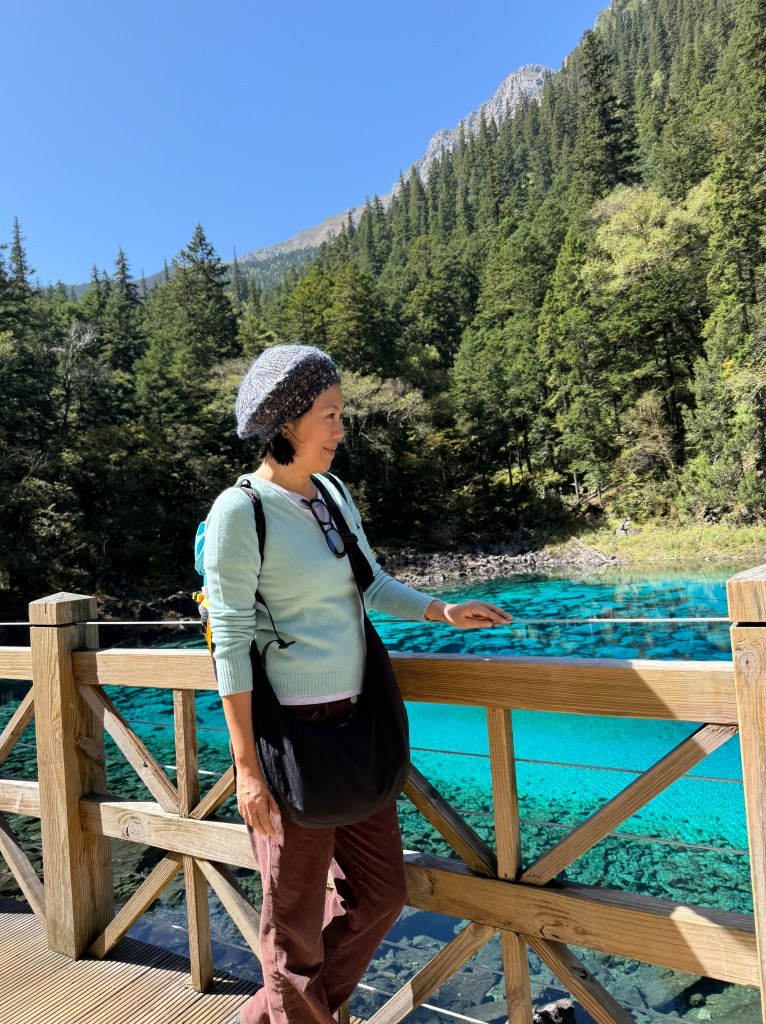
Now, Jiuzhaigou. I’ll be honest — I’d always vaguely assumed it was the kind of destination that gets catastrophically overhyped. One of those “you absolutely must see it!” places that turns out to be mostly tourist crowds, overpriced noodles and a waterfall that looks better in photographs.
I was wrong. Completely, humbly, happily wrong. The place stopped me in my tracks in a way I hadn’t expected — the colours alone are almost offensively beautiful, like someone turned the saturation dial up by about forty percent. It was humbling in the best way. The kind of humbling that makes you quietly grateful rather than small.
I’ve been noticing a pattern: I keep being wrong about China in the best possible way.
Guochao 3.0: When a Culture Stops Borrowing and Starts Exporting
So what exactly is Chinamaxxing tapping into — and why now?
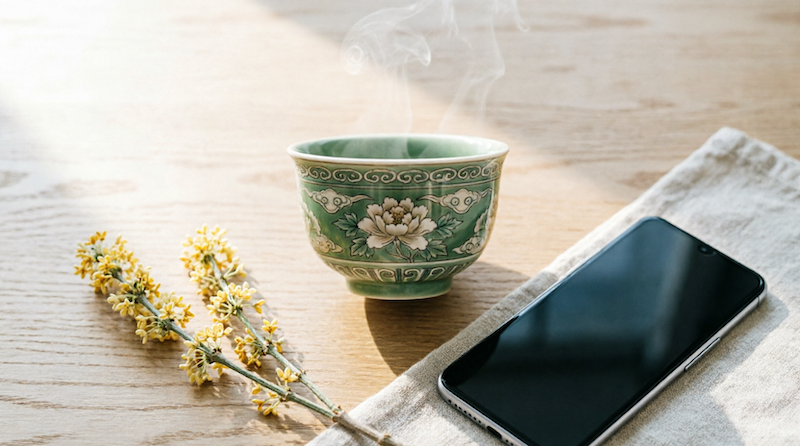
Part of it is a genuine shift in China’s cultural gravity. Guochao — literally “national tide” — has reached its most sophisticated phase yet. If Guochao 1.0 was streetwear and 2.0 was quirky brand collabs, Guochao 3.0 is about modern craftsmanship meets ancient aesthetics. This is a culture that has stopped looking West for validation and started exporting confidence on its own terms.
The numbers back this up spectacularly. Ne Zha 2 became the highest-grossing animated film in history, surpassing $1.7 billion at the global box office — a Chinese story rooted in classical mythology that didn’t simplify itself for a Western audience and won anyway. Black Myth: Wukong broke global gaming records, putting Chinese creative IP on the same conversation as any Western or Japanese franchise. Labubu dolls turned up on the arms of Paris Fashion Week attendees. China went from “factory of the world” to creator economy at scale — less “cheap and fast”, more IP, design, and platform-native storytelling that travels.
This is not a country borrowing cultural credibility from anyone anymore. It’s generating its own — and the world is not just receiving it, it’s actively seeking it out.
For those of us of a certain Singaporean Chinese vintage—who grew up viewing Western brands as the ultimate aspiration—watching this shift has a distinct flavor. A little surreal. Mostly satisfying. A bit ‘I told you so.’ Except, in my case, it was my father who told me so, repeatedly, for decades. I was too busy being impressed with my own disco moves and an insatiable appetite for Grease and ABBA to listen.
Why Western Gen Z Wellness Trends Are Pointing East
The Chinamaxxing trend isn’t just about aesthetics and soft power though. There’s a genuine wellness thread running through it that I find interesting — and personally relatable.
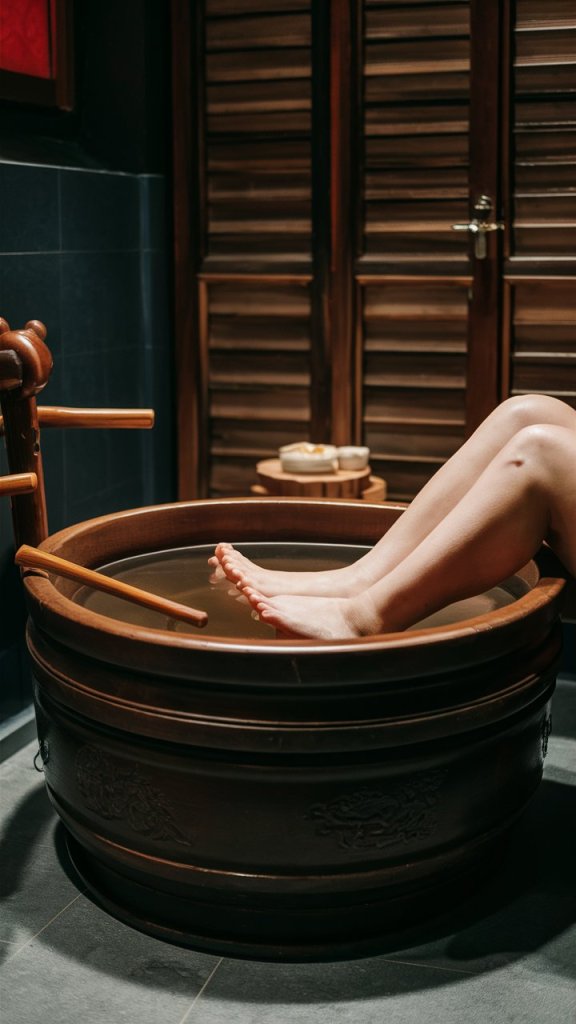
Gen Z creators are swapping Western biohacking for practices framed around longevity, hydration, combating inflammation, and internal balance — and recent surveys suggest that somewhere between 15 to 20% of Western Gen Z respondents now express interest in TCM-based practices over conventional Western wellness approaches. That’s not a fringe number. That’s a meaningful slice of a generation actively looking elsewhere for answers.
A key factor driving the trend is the uptick in wellness culture and a broader move away from Western medicine. When you’re burnt out, sceptical of pharmaceutical-first approaches, and watching your healthcare costs spiral — ancient Chinese wisdom around balance, seasonal living and internal harmony starts to look less exotic and more just… sensible.
I drink warm water now. Started before it went viral, will continue after the meme cycle moves on. I’m TCM-curious in a way that’s less “tourist trying something exotic” and more “person paying attention to what actually works.” I wrote an entire piece last year about ditching Western labels for Chinese brands — not out of nationalism or trend-chasing, but because the quality conversation has genuinely shifted.
The Chinamaxxers and I have arrived at similar destinations via very different routes. Theirs: a sixty-second TikTok and a Fight Club reference. Mine: a forty-year detour through McDonald’s, MTV, a Shanghai work posting, and a father who was trying to tell me something I wasn’t ready to hear.
As one Harvard researcher puts it, the current trend “tells us more about what Americans feel about America than what they feel about China.” That rings true. But I’d add a nuance: for those of us in the Chinese diaspora — Singaporean, Malaysian, wherever — this moment also tells us something about the long, complicated, often unfinished business of figuring out what our own heritage actually means to us. Not as obligation. Not as nostalgia. But as something genuinely worth being curious about.
My father figured that out long before any of us.
I’m just glad — at 58, on a high-speed train to Jiuzhaigou, warm water in hand — that I finally caught up.
Currently somewhere between “TCM curious” and “fully converted.” Made a DIY trip to China recently? Been humbled by Jiuzhaigou, baffled by WeChat Pay, or just found yourself in a very Chinese time of your life? Drop it in the comments — I’d love to hear.
 Live Life
Leave a comment