We hear this ironic little observation rather often: When you have money, you don’t have time. When you have time, you don’t have money. And recently, I heard another variation of this time-money paradox: You finally have the time and the money, but no life.

Good grief. Apparently, there is a very small window in which we are expected to have time, money, health, energy and a life—and somehow have all of them cooperating at once. I’m not sure I have ever managed it. But lately, as I navigate my own transition from a busy career into a semi-retirement lifestyle, I have been wondering whether I have spent too much of my life trying to solve the wrong equation.

The Time-Money Paradox: When I Had Money, but Not Time
For much of my working life, time was the scarce commodity. I worked, I earned, and I was busy. Very busy.
I was fortunate to work in media, and much of it was genuinely fun. We created and managed events, worked with interesting people and brands, and there were plenty of occasions that required dressing up and looking rather more glamorous than I generally do these days. I enjoyed that world.
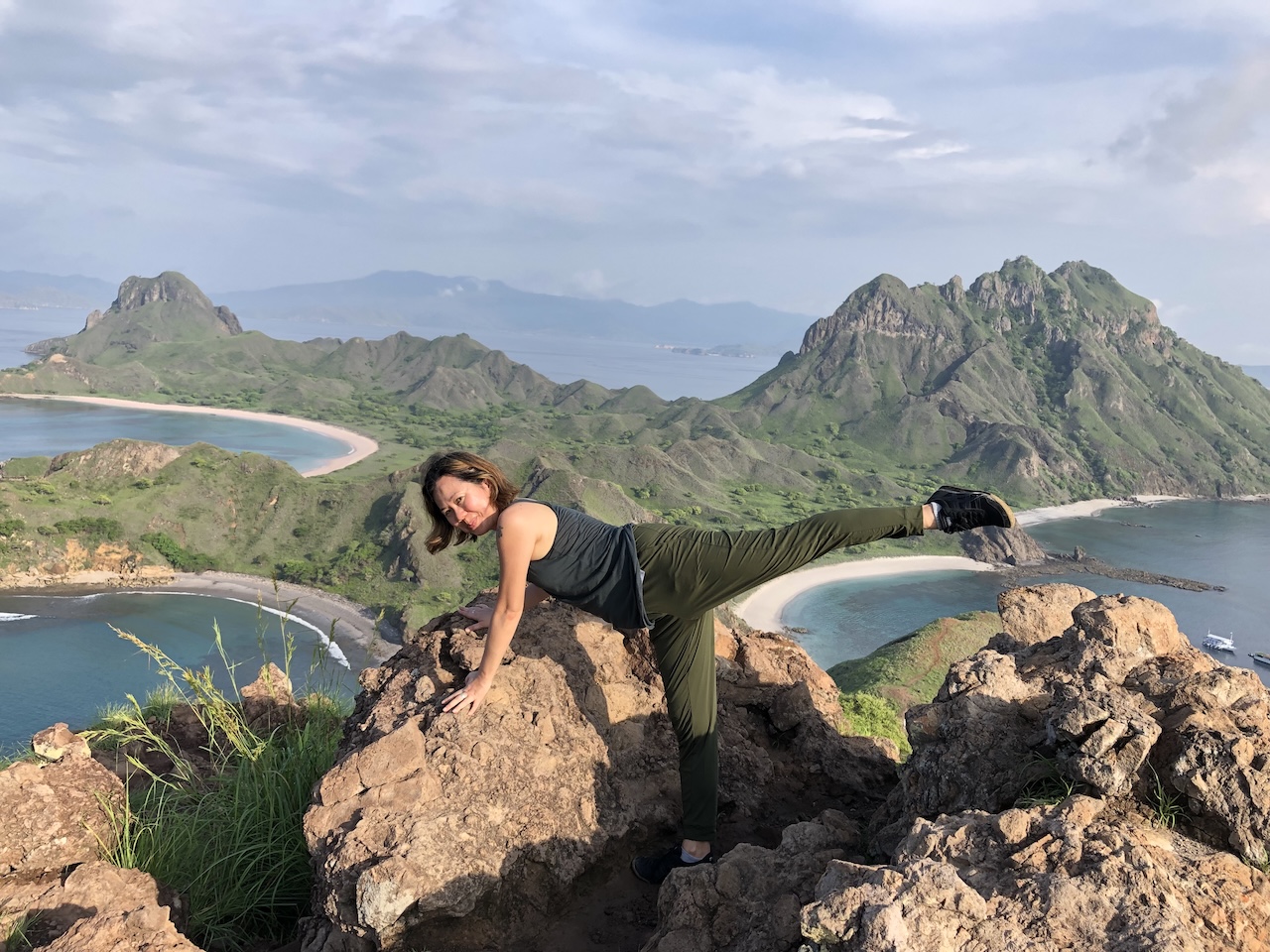
But what looks effortless in a photograph usually has a great deal happening outside the frame. There was always somewhere to be, something to finish, somebody to meet, an event to pull together, or something that needed doing. I moved from one activity to another with the efficiency of someone who had become very good at being perpetually occupied. And at the time, that felt quite normal.
Looking back, I realise that I often used money to solve problems created by not having enough time. Convenience had a price, and I was willing to pay it.
And then there was shopping.
I can admit this now: there was a period when my shopping could probably be described as compulsive. There was always something else that seemed worth buying—something lovely, something useful, something that would make life easier or prettier, or simply provide that small rush of pleasure that comes from acquiring something new.
I could afford it, so why not?
But hindsight is an interesting thing. I now wonder whether I actually wanted all those things—or whether buying things was one of the easiest forms of pleasure to squeeze into an overcrowded life.
When time is scarce, money becomes wonderfully efficient. You can buy convenience, experiences and little rewards for surviving another exhausting week. You can even buy yourself the illusion that you are enjoying the fruits of all that hard work.
What money cannot do is give you back the Tuesday afternoon you rushed through without noticing.

From Sabbatical to Retirement: Why I Stopped Rushing
I have now taken a fairly long break from active work. Quite a long one, actually. Long enough for a dear friend to look at me suspiciously and say, “This isn’t a sabbatical anymore. This looks more like retirement.”
Retirement? I wasn’t entirely sure I was ready for that word. A sabbatical sounds purposeful; sophisticated, even. You are taking time away to reassess, recharge and perhaps return triumphantly with renewed clarity. Retirement sounds rather more… permanent.
And yet, the annoying thing about good friends is that occasionally they have a point. My break has gone on much longer than I originally imagined. But here’s the strange part: I’m not bored. Not remotely. In fact, I seem to be extraordinarily good at keeping myself occupied. The difference is that now, much of the time, I am doing what I love and loving what I am doing. That feels very different from being busy.

Being Busy vs. Being Engaged in Semi-Retirement
This has probably been one of my biggest discoveries. I used to associate a full life with a full diary. If the calendar was packed, things were happening. If I was rushing somewhere, presumably I was important enough to have somewhere to rush to.
There is a certain satisfaction in busyness, and the world gives us plenty of approval for it. “How are you?” we ask. “Busy!” we reply, almost proudly.
Sometimes a very good day doesn’t produce anything measurable at all. It was simply a very good day.
Having more time has also widened my world in ways I didn’t expect. I have the space to follow my curiosity, and new interests have brought new people into my life—sometimes considerably younger ones. My Lindy Hop crowd, for instance, seems to come with an endless supply of youthful energy. I am quite happy to borrow some.
Perhaps that is another difference between being busy and being engaged. I am still doing plenty, but more often now, I am choosing what gets my time rather than simply responding to what demands it.
Redefining Luxury: My Definition Has Changed
There is, of course, a catch. There usually is. I don’t have quite the same freedom to spend that I once did. I have to think a little more carefully before deciding that a fancy trip somewhere would be a marvellous idea and booking it on a whim. I can’t be as extravagant as I once was.
The surprising thing is that, mostly, I don’t feel the need to be. I assumed that having less disposable income would feel like giving something up. Instead, my appetite for certain things seems to have changed.
I still enjoy beautiful places, love travel, and appreciate good food, lovely things and experiences worth remembering. I haven’t suddenly become an ascetic living happily with one bowl, two shirts and a pair of sensible sandals.
But I am much more conscious now of the difference between something I genuinely want and something I simply have the ability to buy. Those are not the same thing.
And strangely, some of the things that give me pleasure these days are decidedly ordinary. I can get ridiculously pleased wandering around one of my favourite organic shops, discovering beautiful fresh produce and wondering what I might do with it. It is still shopping, I suppose—but rather different from coming home with another pair of shoes I didn’t know I needed until I saw them.
We talk a great deal about how much money we need, especially as we get older. How much is enough to retire? How much do we need to maintain our lifestyle? How much should we save? How much can we safely spend?
All sensible questions. But I’m beginning to think there are other questions that deserve just as much attention. How much is enough for the life I actually want? And perhaps more importantly: How much of my life am I willing to exchange for more than that?
Psychology studies frequently point out that “time affluence”—the feeling of having enough time to pursue activities that are personally meaningful—is a far greater predictor of happiness than material wealth. I don’t pretend to have a universal answer. Some people genuinely love their work and have no desire to stop. Others have responsibilities that make stepping away impossible. Some want a larger financial cushion because security matters deeply to them, while others have dreams that require serious money. There is no morally superior version of this.
But I do wonder whether many of us spend years increasing our capacity to earn without stopping very often to examine our capacity to enjoy. We assume more money will eventually buy freedom. Sometimes it does. But freedom also depends on how much we decide we need. That part gets discussed rather less.

Having more time also means I don’t always have to buy the finished experience. I can be curious about how something is made, learn to do it myself and enjoy the process—even when it would undoubtedly be quicker to let somebody else do it.
Take som tam. I could easily walk out of my Bangkok apartment and buy an excellent plate of it without lifting anything heavier than my wallet. But there is a different kind of pleasure in learning how to make it myself—pounding away with a mortar and pestle, adjusting the flavours and discovering that the making can be as enjoyable as the eating.

For years, I often spent money to save time. Now I sometimes deliberately spend time on things that money could easily save me from doing.
Once upon a time, luxury might have meant an expensive purchase or deciding on Friday that I fancied going somewhere and making it happen. Now? Luxury can be waking up and knowing that the day belongs largely to me. It can be taking longer over breakfast, going somewhere without checking the clock every ten minutes, learning to make something I could easily buy, or spending an afternoon on something simply because it fascinates me.
It can mean having a conversation without mentally calculating what I need to do next.
Not rushing.
Who knew that not rushing could feel so extravagant?
The Things I Bought (And the Time I Couldn’t)
Looking back at my working years, I don’t regret them. They gave me independence, funded experiences, allowed me choices, and importantly, helped create the circumstances that allow me to take this long break now. This isn’t a story about work being bad and leisure being good; life is rarely that tidy.
But I do see something now that I couldn’t see while I was in the middle of it. I spent money quite freely because money was renewable. Another month, another salary. Time felt renewable too. There would always be next weekend, next month, next year. One day, when things calmed down. One day, when I had more time.
Except time behaves rather differently from money. You can earn another dollar. You cannot earn another Tuesday. Once an afternoon is gone, it’s gone. This becomes increasingly difficult to ignore as we get older—not in a gloomy, ticking-clock sort of way, but quite the opposite. It makes an ordinary afternoon seem rather precious.
Developing a Taste for the Semi-Retirement Lifestyle
Which brings me back to my supposedly temporary sabbatical. I am still on it, and I am finding it surprisingly difficult to imagine giving up this rhythm completely. Not because I want to do nothing. That’s the interesting part. I want to do lots of things. There are places I want to see, things I want to learn, ideas I want to explore, people I want to spend time with, and projects I want to pursue.
I have simply become less interested in rushing through all of them.
Perhaps what I value most isn’t simply having more free time. It’s having enough space in my life to follow my curiosity—to try something, learn something, meet someone or go somewhere without needing every experience to have a productive purpose.

I have less appetite for extravagance, more respect for my time, and a much clearer sense that a life doesn’t have to be constantly busy to be full. I used to spend money to save time. These days, I’m much more interested in spending my time well. And perhaps that is my definition of wealth now: not having everything, but having enough—and having the time to savour it.
And I rather like it here.
What about you? Has your definition of luxury changed over the years? What feels luxurious to you now that wouldn’t have seemed luxurious ten years ago? Let me know in the comments below.
Leave a Reply