What a morning at Bukit Canberra taught me about lifelong learning, healthy eating, and appreciating the wisdom behind everyday habits.

One thing I’ve realised about active aging is that staying physically active is only half the equation. Keeping the mind curious may be just as important.
Over the past few years, I’ve found myself becoming increasingly intrigued by a wide spectrum of topics. One month it might be value investing, another month it’s exploring the latest AI tools. More recently, my curiosity has turned towards nutrition—not dieting or chasing the latest food trend, but understanding how our nutritional needs evolve as we age.
After all, if we’re fortunate enough to live longer, shouldn’t we also learn how to live better?

More Ubud Spa, Less Science Lecture
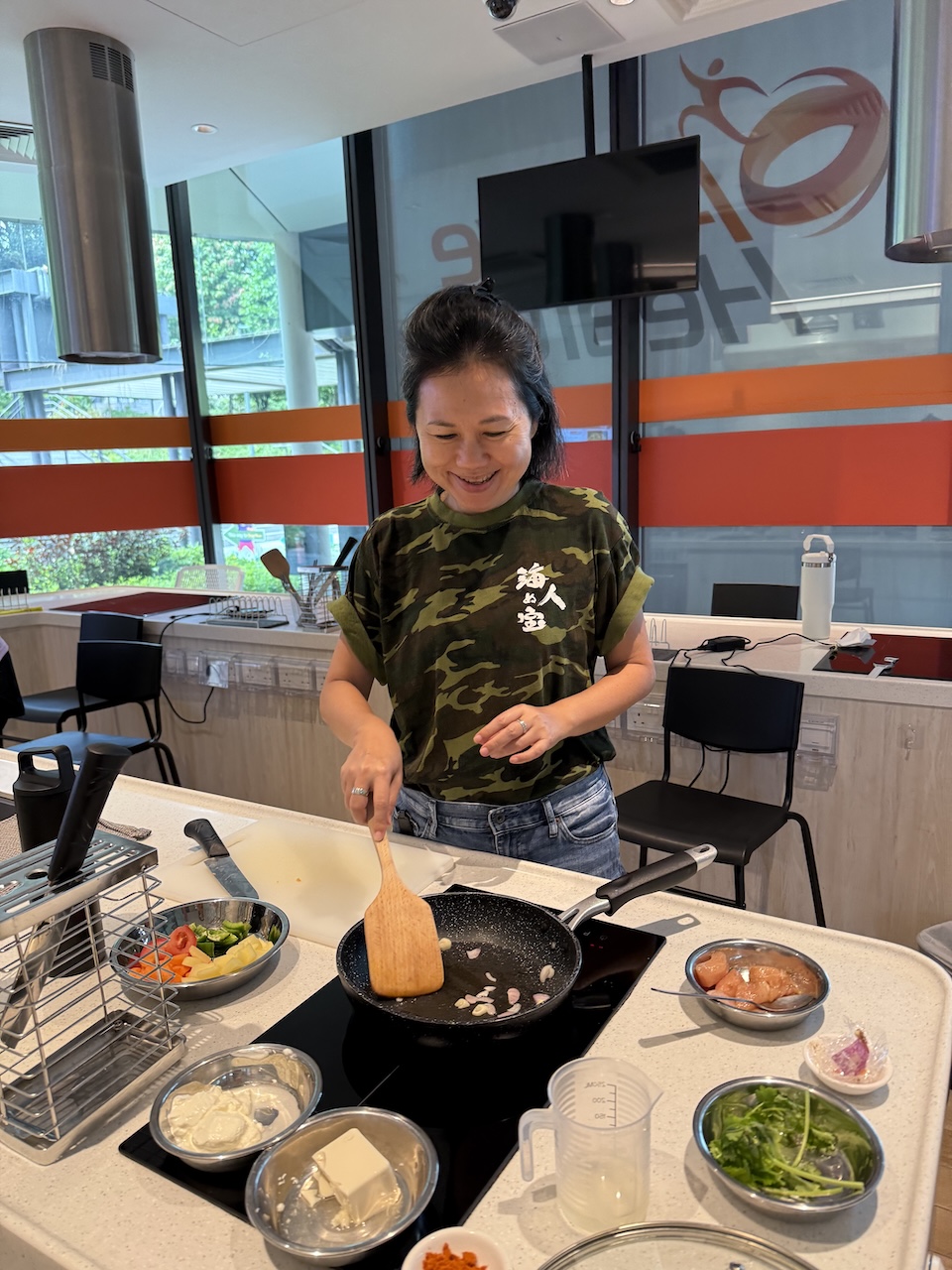
I recently signed up for an Active Health nutrition and cook-along session titled “Eat Better for Greater Energy & Musculoskeletal (MSK)-related Conditions.” The one-hour workshop focused on daily protein and calcium needs to support muscle and bone health as we age.
The workshop was held at the Active Health Nutrition & Wellness Studio in Bukit Canberra—a part of Singapore I’ve been meaning to visit for quite some time. By Singapore standards, a 1½-hour journey feels like travelling across the island! I’d often put it off because it seemed “too far.”
Looking back, I’m so glad I finally made the trip.
The Nutrition & Wellness Studio immediately gave me a sense of calm. It was bright, modern and thoughtfully designed, but what really caught my attention was the soft background music gently playing throughout the space. It reminded me of the relaxing spa music you hear in Bali, creating an atmosphere that made it easy to slow down, be present and simply enjoy learning.
Sometimes it’s the little touches that transform a class into an experience.

More Than Just Another Cooking Class
I’ve attended cooking classes before, but this one felt very different.
Perhaps it’s because I’ve changed.
When I was younger, I was interested in cooking techniques and recipes. These days, I’m more interested in understanding why certain foods are good for us and how our bodies actually use them.
As the saying goes, “You are what you eat.” But perhaps just as importantly, it’s how you prepare your food—and how well your body absorbs its nutrients—that makes the difference.
Our nutritionist, Janelle, was excellent. Rather than overwhelming us with scientific jargon, she explained practical ideas that we could immediately apply in our own kitchens.

When Modern Science Validates Grandma’s Kitchen Rituals
One of the biggest takeaways from the session wasn’t a new recipe—it was discovering two words that had never crossed my radar before: oxalates and phytates.
I’ll be honest. Until that morning, I had never even heard of them. If someone had asked me what they were, I would probably have looked at them blankly!
Janelle explained that some vegetables contain oxalates, natural compounds that can bind with calcium and reduce how much our bodies absorb. Although kale is already relatively low in oxalates compared with vegetables like spinach, blanching it can reduce soluble oxalates even further.
She also introduced us to phytates, naturally occurring compounds found in whole grains, legumes, nuts and seeds. Phytates can bind to minerals such as calcium, iron and zinc, making them slightly harder for our bodies to absorb. Traditional practices such as soaking grains before cooking can help reduce phytates.
That was my lightbulb moment.
Growing up, I watched my godma and the older generation wash and soak rice before cooking it. Back then, I assumed they were simply removing dirt or excess starch. I never questioned it—it was just “the way things were done.”
Now, decades later, I find myself appreciating those everyday kitchen rituals from a completely different perspective. They may not have used words like oxalates, phytates or mineral absorption, but experience had taught them habits that modern nutrition is now helping to explain.
It’s funny how life comes full circle.
When we’re young, we sometimes question everything our elders do.
As we grow older, we begin to understand that wisdom doesn’t always come wrapped in scientific terminology. Sometimes it comes from years of observation, passed quietly from one generation to the next.

Small Changes, Fresh Perspectives
The class also prompted me to make a couple of small changes at home.
I’ve started blanching my kale before adding it to my salads—a tiny adjustment that takes only a minute or two but may help improve calcium absorption.
The discussion about phytates also reminded me of those rice-soaking habits I’d watched for years without ever understanding why. As someone who batch cooks, soaking my rice overnight is an easy change to make before the next batch.
They’re hardly life-changing adjustments.
But perhaps that’s the point.
Healthy aging isn’t usually about dramatic transformations. More often, it’s the accumulation of small improvements, made one discovery at a time.

Curiosity as a Longevity Supplement
Was the 1½-hour journey to Bukit Canberra worth it?
Without hesitation—yes.
I finally visited a part of Singapore that had been on my list for far too long. I learnt more about nutrition in one hour than I expected. I discovered two new words—oxalates and phytates—that had never been part of my vocabulary before. And perhaps most importantly, I gained a new appreciation for the quiet wisdom of the older generation.
One of the joys of growing older is becoming more comfortable saying, “I didn’t know that.”
Instead of feeling embarrassed, I find it rather exciting.
It means there’s still so much left to learn.
That morning at Bukit Canberra wasn’t really about calcium.
It wasn’t even about kale.
It was a reminder that active aging isn’t simply about keeping our bodies moving.
It’s about keeping our minds open.
As long as I’m still curious, still asking “Why?” and still willing to learn something new, I think I’m aging in exactly the way I hope to.
Leave a Reply